Seeds, Soil & Skills: Free Garden Kits | ORCA
"Healthy food starts in healthy soil. ORCA's One Health Garden Program puts free, locally soil-tested garden kits in the hands of the households and communities that need them most — with the seeds, amendments, and skills to grow."Blog post description.
David King
6/26/202611 min read
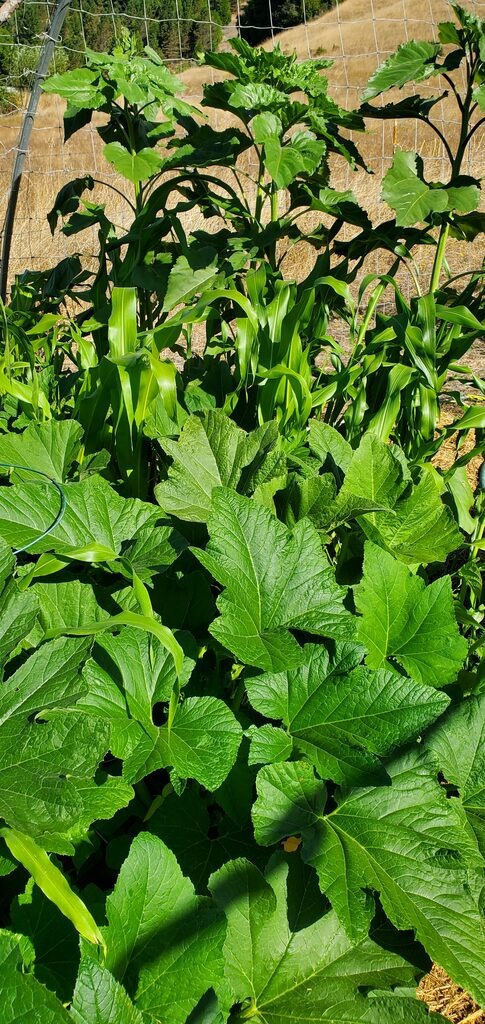
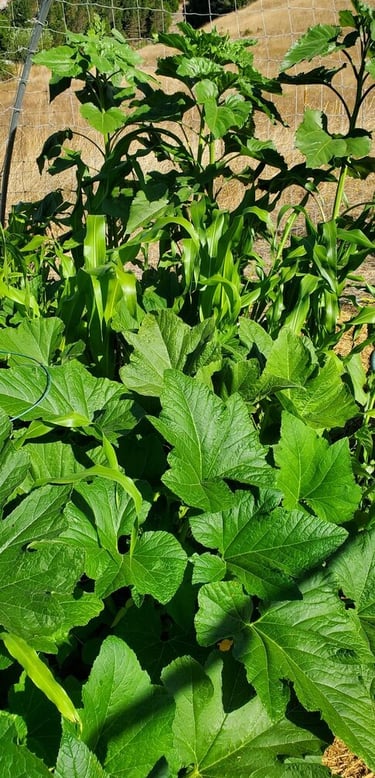
ORCA One Health Garden Program
Seeds, Soil & Skills
Working with nature. Growing with neighbors.
Why this kit exists
There are few things as satisfying as walking out the back door and picking dinner. A handful of greens, a few tomatoes still warm from the sun, beans you watched climb up a trellis you built yourself. Growing food connects you to your soil, your seasons, your neighbors, and your own ability to put something real and good on the table with your own hands.
ORCA built the One Health Garden Program so more people can experience that — and more often. Each kit gives a household the seeds, the soil amendments, and the plain-language knowledge to put in a productive garden on native ground, without guessing and without overspending.
The first kits are headed to food banks, senior centers, and community partners across Northern California. Long term, we'd like one in every household that wants one — for the food, for the connection, and for the simple joy of watching a seed you planted become a meal on your table.
What's in the kit
Three things, each one essential:
• Seeds — open-pollinated vegetable varieties matched to our Northern California climate, plus a cover crop blend for soil building. Open-pollinated means you can save seed from your own garden and replant indefinitely.
• Soil — organic amendments calibrated to our local native ground. Your kit label will tell you the bed area it's sized for. Start with the area you can manage, and use the rest when you expand.
• Skills — a plain-language guide, the planting layout, and links to the deeper educational material for anyone who wants to know the why behind the how.
The included planting layout is sized for an 8 by 16 foot bed — 128 square feet of growing space. That's enough to make a real difference in a household's vegetable supply, and small enough to manage by hand without machinery. The same layout pattern can be repeated or expanded if you have more room.
Our approach: biological, not chemical
We're not asking the soil to perform under chemical pressure. We're working with it.
Plants, microbes, soil, water, sun, and the gardener all working in symbiosis — the way nature already does it when we get out of the way. Healthy soil grows nutrient-dense food. Nutrientdense food grows healthier people. The chain starts in the ground.
And we want the gardeners working in symbiosis too — sharing seeds, sharing what worked, sharing what didn't. The more households growing, the stronger the community. “Nature as principle. Methods as tools.”
A beginning, not an end
This kit doesn't end here — it begins here. As a community, we will explore the house we live in: the soil, the plant, and the human as separate rooms in the same house.
We will follow the connections between them — from soil to plant to body. The same calcium and magnesium that govern soil structure also govern how your muscles contract and release. The same lipids that bind soil aggregates together also build the plant cell membranes that capture sunlight, and the cellular membranes that hold your body together. The chemistry doesn't change as it moves through the rooms — only what it builds.
The kit gets you in the door. The exploration is what we do together once we are inside.
Four simple steps
The deep technical work — soil testing, amendment formulation, mineral balance — is already done. We did it so you don't have to. Here's what you do:
1. Open the ground. Loosen the soil as deeply as you can with whatever tools you have on hand. The deeper the better.
2. Apply your soil amendments in three rounds. Divide the amendments in your kit into three roughly equal portions. Spread the first portion evenly over your bed and water it in — do not rake it in. Wait 2 to 3 weeks, then spread the second portion and water it in. Wait another 2 to 3 weeks, then the third. Splitting the application keeps the plants from being overwhelmed and keeps the minerals from washing away before the soil can hold them.
3. Plant your garden. Follow the planting map included with your kit.
4. Keep it covered and watered. Never leave bare soil — keep living plants or mulch on it at all times.
A word on municipal compost
Before you add any other compost or amendment on top of what's in your kit, please read our work on municipal and industrial compost contamination. Free or low-cost compost from city or county waste streams can carry heavy metals, persistent herbicides, and other compounds that build up in soil over time and end up in the food. We've seen catastrophic crop losses from this on farms across Mendocino County.
Important: much of this compost is sold as certified organic. But standard compost testing does not cover the persistent herbicides, PFAS, or microplastics that come through municipal waste streams — and the heavy metal limits that are tested are set for general agriculture, not for food gardens or vulnerable populations. The organic label alone is not a safety guarantee.
If you're not sure what's in something, don't put it on the bed. Stick with what's in the kit, your own kitchen scraps composted at home, or known clean materials. When in doubt, ask us.
Learn more — the depth behind the kit
These pieces show the level of soil science and biology going into every kit. You can read them as-is, or drop them into an AI tool (ChatGPT, Claude, etc.) and ask it to reformat the information for your specific garden, climate, or experience level. AI doesn't have the field knowledge to generate this material from scratch, but it's genuinely useful for turning a technical document into a personal SOP you can actually follow. Use the tools you have.
→ From Hardpan to Harvest — how we brought a locked native soil back to life in one season for under 10 cents per square foot
→ Is Your Soil Safe? — what you need to know about municipal waste compost before you put it on your bed
We want your input
We're still finalizing what goes in the kit, and we want community input before we lock it in.
What do you want to know? What stopped you the last time you tried to grow food? What do you wish someone had told you before you spent money at the nursery? What questions do you have about soil, water, seeds, timing, pests, or what to do with the harvest once it shows up?
Drop us a message through the contact form, comment on our Facebook post, or call. Every question helps us build a kit that actually answers what people are asking — not what we assume they're asking.
How to get a kit
Initial distribution is through partner organizations: food banks, senior centers, and community safety groups across Northern California. If you're with one of those organizations and want to receive kits to distribute, please get in touch.
If you're a household that would like a kit and there isn't a partner organization near you, contact us. We're tracking demand so we can plan the next round of production and fundraising.
If you'd like to support the project — financially, with seed donations, or with volunteer time — we'd be grateful. Every contribution puts another kit in another household.
Thank you to our seed donors
None of this works without the generous open-pollinated seed donations from local seed associations, community seed libraries, and small seed companies that share our commitment to seed sovereignty and food security.
Donor list
Sow Right Seeds
Field of Dreams Local Seed Project
The Seed Library, Round Valley Public Library
YoKayo Seed Project, Ukiah Library
Special thanks to the hard work of Julia Dakins of Going to Seed. I would be hard-pressed to find a group in our county that hasn't benefited from her work.
Special thanks to MedVets for their donation of elements, local testing, and tireless outreach to our community.
There are a couple of names I am missing from the Anderson Valley Seed and Scion exchange. I will see you again next year and update this blog.
If you are part of a seed library, seed association, or seed company and would like to support this project, please reach out.
About ORCA
The Organic Regenerative Certified Apprenticeship (ORCA) is a California nonprofit founded in
2025, dually registered with the California Division of Apprenticeship Standards and the United States Department of Labor. ORCA develops the next generation of soil and food-system practitioners through a multi-sector curriculum rooted in precision mineral management, biological farming, and the soil-plant-human-health continuum.
The One Health Garden Program brings biological-farming education and infrastructure to the populations that benefit most when the soil they grow food in is healthy — households, schools, hospitals, correctional facilities, and tribal communities. The household garden kit is the program's most accessible entry point: a complete starter package any family or individual can use to put nutrient-dense food on their own table.
About the One Health framework
One Health is a scientifically and federally recognized framework that treats human, animal, plant, and environmental health as a single interconnected system. The premise is straightforward: you cannot meaningfully improve health in any one of those domains without working on all of them. Healthy soil grows nutrient-dense food. Nutrient-dense food grows healthier animals and people. Healthier people build stronger communities. The chain starts in the ground.
In the United States, One Health is the operational framework of several federal bodies:
• The Centers for Disease Control and Prevention (CDC), which established a dedicated One Health Office in 2009
• The United States Department of Agriculture (USDA), which integrates One Health into animal, plant, and human nutrition initiatives
• The Food and Drug Administration (FDA), particularly in food safety and antimicrobial resistance work
• The National Academies of Sciences, Engineering, and Medicine (NASEM), whose 2024 consensus study Exploring Linkages Between Soil Health and Human Health examined the connections between soil and human health
ORCA's One Health Garden Program is grounded in that 2024 NASEM consensus study. Every kit, every planting layout, every soil amendment we distribute is calibrated to that science. When you plant a garden with this kit, you are not just growing food — you are participating in a framework that connects what you do in your backyard to the health of your family, your community, and the wider environment.
A personal note
This page reads official, and the science behind it is real. But it should be said plainly: this work has been built and self-funded by one person — me, a feral hippie child of the back-to-the-land movement who first amended ground in 1974, arrived in Mendocino County in 1982, and has been at it ever since. No corporate backer, no government grant, no marketing department. Just decades of practice and the conviction that nutrient-dense food grown in healthy soil belongs in every household.
— David
ORCA One Health Garden Program
Seeds, Soil & Skills
Working with nature. Growing with neighbors.
A Community Call for Input
We are reaching out to the people and organizations who feed, support, and steady our communities — food banks and senior centers, tribal communities, home and market gardeners, and the neighbors working on food security and emergency resilience. Before we build the next stage of this program, we want to hear from you.
The ORCA One Health Garden Program puts the tools for growing nutrient-dense food directly into the hands of the households and communities that benefit most from healthy soil. The household kit is the program’s most accessible entry point: a complete starter package — amendments blended to parts-per-million for our local ground, open-pollinated seed that can be saved and replanted, a planting layout, and the skills to use them — that any family can put to work on their own table, or store as an emergency garden ready when it’s needed.
That last piece matters here. A household that can grow its own food is a household that is more resilient in a disruption — a supply shock, a disaster, a hard winter. We see these gardens as both everyday nutrition and standing community insurance.
Our goal is to give these kits away free to the households that need them. How far we can take that depends on community support — which is part of why we’re reaching out.
Why we’re asking before we build
ORCA’s philosophy is “working with nature, growing with neighbors.” The “neighbors” part is not decoration. A program designed in isolation serves the designer; a program shaped by the people who will actually use it serves the community. We would rather adjust now — what goes in the kit, how many, who they reach, what they cost — than guess and miss.
So this is a genuine request for input, not a pitch. Tell us what you actually need, and we will design toward it.
What we’d like to learn from you
— Interest — Is this something your organization, members, or community would want? Would you help distribute it, host it, or point people toward it?
— Demand — Roughly how many households or individuals could you see this reaching through you in a season? Is the need steady, seasonal, or tied to emergencies?
— Needs & gaps — What would make this genuinely useful for the people you serve? What are we likely to overlook — language, accessibility, growing conditions, cultural foods, space constraints, physical ability?
— Fit — Does the emergency / food-security framing match what you’re seeing on the ground, or is the everyday-nutrition angle more important to your community?
— Capacity — What can you bring, and what would you need from us? Storage, volunteers, a drop-off point, a contact list, translation, training, follow-up support?
— Barriers — What would stop this from working with your community, and what would have to be true for it to succeed?
What we already have in hand
So you know this is real and ready to shape:
• Soil amendments blended to local ground using precision (parts-per-million) mineral analysis.
• An open-pollinated, seed-saveable variety list built around an 8×16 biointensive garden, so a household can grow this year and replant from its own seed next year.
• A planting layout and schedule suited to our region, plus the supporting skills and guidance.
• Existing seed-company donation relationships and grant pathways we are actively pursuing to keep household cost low or free.
How you can help make this free
Our aim is to put these kits in people’s hands at no cost. How many we can give away comes down to how much support gathers around the program. If this is something you’d want to back, there are a few ways in — all welcome, none expected:
• Sponsor a kit — we’re exploring a “buy one, give one” model, where purchasing a kit for yourself funds one donated to a household in need. A straight donation toward kits works just as well.
• Lend a hand — filling and packing kits, blending amendments, sorting and packing seed, or helping with local drop-offs. Many hands here is what lets us make more, for less.
• Help us source — seed, materials, bags, or storage space, or a connection to someone who can provide them.
• Spread the word — point us toward households who’d use a kit, or other groups who might want to take part.
Being upfront: this is early, and give-it-away-free is the goal we’re building toward, not a guarantee yet. The more support we find, the more we can do — so if any of the above is a fit for you, we’d love to know.
How to respond
There’s no form to fill out and no commitment in replying. A short note, a phone call, or a conversation is exactly what we’re after. Tell us what you think, what you’d change, and whether your community would use it.
If it’s easier, just answer the questions above in whatever order matters most to you — even one or two answers is a real help.
ORCA One Health Garden Program
Seeds, Soil & Skills—Working with nature. Growing with neighbors.orca-ca.com|svafarm.


