Our Mission
ORCA empowers the next generation of regenerative agriculture professionals through rigorous, science-based apprenticeships that advance soil health, microbial diversity, and ecological farming systems.
Nonprofit Status:
California registered nonprofit organization
Federal 501(c)(3)
Triple Organization Excellence
ORCA
Program Coordinator
Curriculum development
Technical training in regenerative agriculture
Competency standards & quality assurance
Agricultural expertise
Performance evaluation
New Opportunity Systems
Employer Organization
Farm recruitment & outreach
Employer onboarding
Workplace compliance assistance
Farm-apprentice matching
Employer advocacy & support
Advancing Apprenticeship Association
Employee Organization
Apprentice recruitment
Worker rights education
Career counseling
Wage representation
Worker advocacy & grievance procedures
Strategic Advantages
✓ Eliminates conflicts of interest through separate advocacy
✓ Specialized expertise in each domain
✓ Checks & balances system with triple accountability
✓ 360° support for farms AND apprentices
✓ Enhanced credibility with funders and regulators
✓ Labor law compliance protection
How do we work?
Our Approach: Building on Solid Foundations
Partnering with Local Communities
ORCA takes a progressive approach to regenerative agriculture education:
Foundation Level (Current Program): Beginning apprentices learn regenerative practices that are compatible with advanced mineral and microbial management, even before they learn to perform the analysis themselves. They learn:
Principles Before Analysis - Understanding what healthy soil looks like and how to support it
Working with Consultants - How to collect samples, interpret reports, and implement recommendations
Foundational Practices - Cover cropping, composting, minimal tillage, and water management that support soil biology
Observation Skills - Recognizing plant health indicators and soil quality markers
Advanced Track (Future Development): After 2+ years and foundation program completion, apprentices can pursue specialist training in:
Laboratory Skills - Learning to perform qualitative microbial observation and analysis
Microscopy - Identifying and counting soil organisms
Complex Testing - Soil paste analysis and sap testing
Consultant Skills - Making recommendations based on comprehensive data analysis
Experienced Farmer Track: Farmers with existing experience can:
Test out of basic modules
Fast-track to advanced skills training
Focus on analytical techniques and consultant-level interpretation
Bring their practical knowledge while gaining technical expertise
Our Philosophy
We follow nature's principles while building toward advanced technical skills. Our foundation program teaches practices that work—even before apprentices understand all the science behind them.
Progressive Learning Model:
Do it right - Learn regenerative practices that support soil health
Understand why - Learn the principles behind the practices
Analyze it - (Advanced track) Learn to test and interpret soil data yourself
Consult on it - (Advanced track) Guide other farmers in implementation
Key principles guiding our work:
Soil First - Healthy soil creates healthy plants
Constructive Over Deconstructive - Building soils that improve over time (constructive), not deplete (deconstructive)
Work with Specialists - Know when to bring in consultants and experienced farm managers, and how to implement their guidance
Observation Matters - Visual and sensory assessment skills are foundational
Data Informs Practice - Testing reveals what observation cannot see (for advanced practitioners)
California’s apprenticeship system is built on a braided funding model—combining employer contributions, state and federal grants, and nonprofit support to deliver high-quality, hands-on education. ORCA acts as the connective tissue between these funding streams and the people who need them most: small regenerative farms and their employees.
California apprenticeships are “earn-and-learn” programs that combine paid, on-the-job training with classroom instruction, creating a direct pathway to skilled careers.
In California, registered apprenticeship programs are industry-driven and designed to meet workforce needs while supporting learners from diverse backgrounds. Apprentices gain real-world experience while receiving formal education, often through partnerships with community colleges or training centers. The state’s initiatives—like the California Apprenticeship Initiative—aim to expand access to high-quality apprenticeships across emerging and underserved sectors, making them a vital tool for economic mobility and community development.
💡 How ORCA Makes It Work
ORCA is committed to building strong, interconnected communities through education, collaboration, and shared purpose. We partner with local businesses, primary schools, community colleges, and other educational organizations to expand access to regenerative agriculture beyond the farm.
In addition to training apprentices, ORCA develops inclusive curricula for community members who are not enrolled in apprenticeship programs—ensuring that regenerative knowledge reaches families, educators, and everyday consumers. By educating both producers and consumers, we help bridge the gap between food production and food choice.
This approach creates resilient, food-literate communities where people understand the impact of their agricultural systems and feel empowered to participate. Whether you're growing food or choosing it at the market, ORCA helps connect the dots—cultivating a culture of stewardship, health, and shared responsibility.
Our Story
ORCA was founded to address California's critical need for trained regenerative agriculture professionals who understand both the science and practice of soil health. Drawing on decades of experience in biological farming and California's leadership in agricultural innovation, we developed a comprehensive apprenticeship program that meets state standards while addressing the real needs of working farms.
Our curriculum development is farmer-driven:
We work directly with regenerative farms to identify skill gaps
Training evolves based on what farmers actually need
Apprentices learn practices that lead to employment and farm ownership opportunities
We prepare graduates for California's evolving regulatory landscape
Training includes understanding regenerative certification requirements for funding access
We stay current with CDFA definitions, 30x30 agenda requirements, and emerging programs
Our approach is informed by:
California Department of Food and Agriculture's 2023 Soil Biodiversity Report
The foundational work of Dr. William Albrecht on soil mineral balancing
Neal Kinsey's practical application of the Albrecht method
Dr. Arden Andersen's work on quantum agriculture and soil physics
N.A. Krasil'nikov's research on soil microorganisms and higher plants
Soil microbial ecology concepts inspired by Dr. Elaine Ingham's research
John Kempf's work on plant sap analysis and nutritional immunity
Nicole Masters' approach to soil health and holistic management
Dr. Christine Jones' research on liquid carbon pathways and soil building
Decades of practical regenerative farming experience
Current soil science and microbial ecology research
Direct feedback from host farms and employers
501(c)(3) Status
ORCA is a California registered nonprofit organization.
California Registration: B20250357159
Federal 501(c)(3) Status: Application pending with the IRS
Note: Donations are not yet tax-deductible as we await final federal 501(c)(3) approval.
California DAS Certification
Our apprenticeship program is registered and approved by the California Division of Apprenticeship Standards (DAS).
DAS Program Number: 101310
Leadership
David King, Founder & Program Director
With decades of experience in regenerative agriculture and advanced soil analysis, David King specializes in mineral management and microbial ecology at a consultant level. He has helped farms across the U.S. improve soil health, increase yields, and reduce inputs through data-driven soil management.
Professional Specializations:
Advanced mineral balancing and elemental ratio management using the Albrecht method
Qualitative microbial analysis and soil food web observation
Functional living soil systems design
Heavy metal mitigation and nutrient density optimization
Training farmers to work effectively with soil consultants and experienced farm managers
Educational Approach: David King believes in meeting farmers where they are—teaching foundational practices first, then building toward advanced analytical skills for those ready to pursue consultant-level expertise. The foundation program focuses on practices that work, with future advanced tracks offering the "why" and "how to measure" for those who want to specialize.
Theoretical Foundation: Mineral balancing approach draws from Dr. William Albrecht's foundational research and Neal Kinsey's practical applications. Understanding of soil microbiology integrates N.A. Krasil'nikov's work on soil microorganisms and higher plants with soil microbial ecology concepts from Dr. Elaine Ingham's research. Plant health and nutrition incorporates John Kempf's insights on sap analysis and nutritional immunity. Holistic soil building incorporates Dr. Christine Jones' liquid carbon pathway research, Nicole Masters' regenerative approaches, and Dr. Arden Andersen's insights on soil physics and biological systems.
Board of Directors:
David King - Board Chair
Diana Esser- Treasurer
Dylan Olsen - Secretary
Garret Lumley
Our Values
Scientific Rigor - Using data and testing to guide decisions
Ecological Wisdom - Learning from and working with nature
Practical Skills - Hands-on training for real-world farming
Continuous Learning - Agriculture is always evolving
Accessibility - Making regenerative farming education available to all
Our team
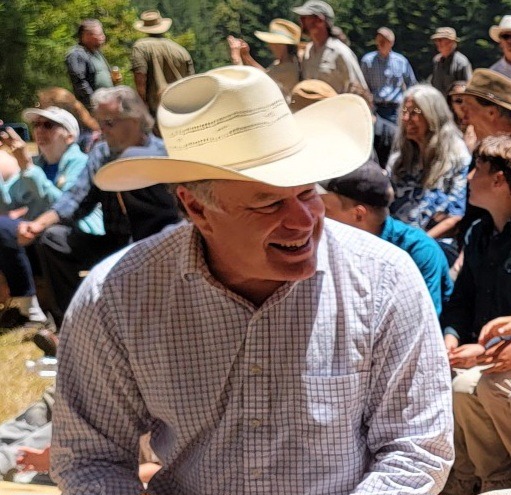
David King
David King is a second-generation back-to-the-lander, raised in a culture rooted in organic food, ecological living, and deep connection to nature. With decades of experience as both a farmer and consultant, David takes a supportive, collaborative role in helping growers succeed—always honoring their unique context and goals.
His work centers on regenerative agriculture as a grassroots movement, with a deep focus on soil management: balancing elemental nutrition, monitoring microbiology, and understanding plant physiology to restore living systems from the ground up. David supports all forms of natural agriculture—including those who are integrating regenerative practices into conventional models—and believes that healthy soil is the foundation of healthy communities.
As the founder of ORCA (Organic Regenerative Certified Apprenticeship), David is building a vibrant ecosystem of farmers, apprentices, and educators—united by a shared commitment to ecological restoration, food as medicine, and community resilience.
David also brings decades of entrepreneurial experience, having served as a business owner and manager since the early 1980s. Often the youngest member of the team, he led by example—learning every aspect of the business and inspiring others to expand their skills and responsibilities. This mentorship-driven approach became the cornerstone of his management philosophy: train and uplift those who wish to grow, and the entire enterprise thrives.
His businesses consistently paid the highest wages in their sectors—not through excess, but through efficiency, loyalty, and shared purpose. Employees under his guidance often went on to become business owners or managers themselves, carrying forward the values and skills they gained. David’s model has always mirrored an apprenticeship system—productivity-driven, self-sustaining, and deeply invested in people. It’s this philosophy that now powers ORCA: a living framework where every dollar, every lesson, and every relationship counts.
calorcaprogram@gmail.com
Training the Essential Translators
California agriculture needs professionals who bridge two worlds: traditional farming wisdom + modern regulatory expertise.
ORCA apprentices emerge as fluent translators—implementing nature-based solutions while ensuring complete compliance with environmental, employment, and safety standards.
"Anyone can hire a soil consultant for knowledge. What's hard is translating technical expertise into usable SOPs, training materials, and farm systems. That's where ORCA shines."