We Are The Soil: Why Today's Soil Decisions Matter for Three Generations
How soil minerals flow through plants into human DNA—and why balancing soil chemistry today protects the genetic health of children born in 2090. The molecular pathway from stewardship to wellness.
David King
1/31/202633 min read
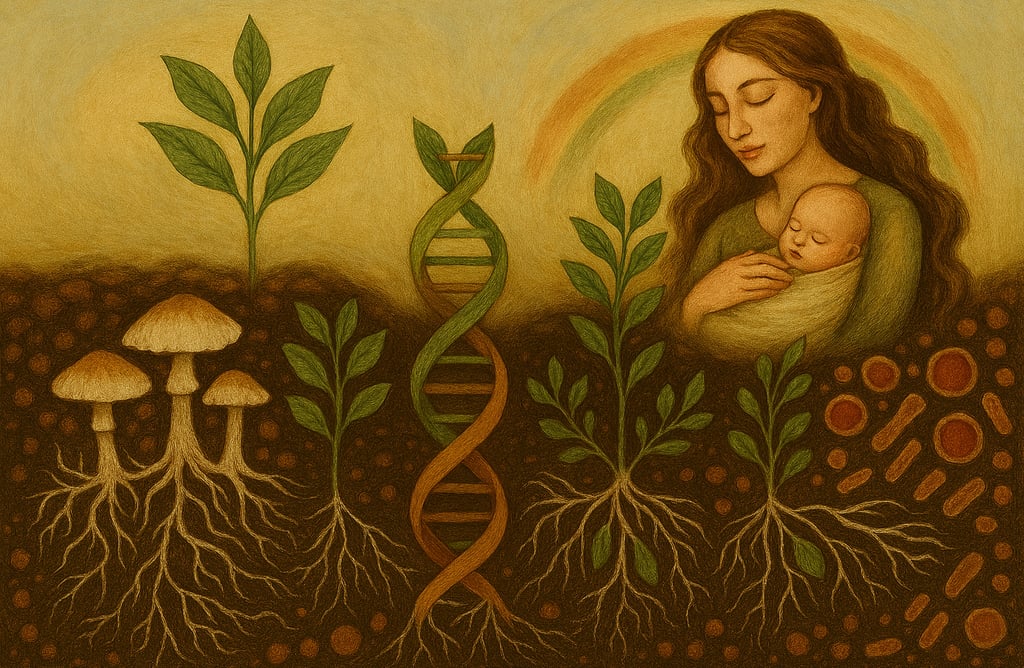
From Dust to Dust: The Molecular Path from Imbalanced Soil to Human Disease
A comprehensive analysis of how soil elemental imbalance creates disease through imposter element uptake, enzyme cofactor substitution, DNA damage, and transgenerational epigenetic inheritance
Author: David King, Executive Director, ORCA (Organic Regenerative Certified Apprenticeship)
Date: January 2026
Contact: [ORCA contact information]
Privacy Notice: All identifying information has been removed from soil test data to protect privacy. Laboratory names, report numbers, sample identifiers, specific dates, and geographic locations have been replaced with generic descriptors. The soil chemistry data and scientific analysis remain accurate and unaltered.
Abstract
My world is in the soil and the plants—that's where my expertise lies. But working in natural systems, I encounter patterns that connect soil, plants, and humans—patterns that raise questions beyond my field.
Organic and regenerative farming are grassroots movements. Historically, we've had no help from government or higher education. We're left as citizen scientists, running our own trials, creating our own methods.
From my observations in soil and plants, I see questions that need asking. I don't see our government, higher education, or even school districts addressing them—especially in farm-to-school programs where it matters most.
Like farming itself, these answers historically come from the people.
This blog poses questions from the field, hoping someone will take an interest in foundational health. If we cannot manage to protect our children's health in a school garden, do we have a chance of addressing it for society as a whole?
The ancient wisdom "from dust you came, to dust you shall return" reflects a literal molecular truth: every atom in the human body originated from weathered rock, entered soil, passed through plants and animals, and assembled into human tissue. This continuum creates direct molecular pathways linking soil elemental imbalance to human disease. When soil exhibits antagonistic mineral ratios, plants uptake "imposter elements" (Cd²⁺ for Zn²⁺, Pb²⁺ for Ca²⁺, As³⁻ for PO₄³⁻) through the same transport proteins meant for essential nutrients. These imposters bioaccumulate through the food chain and substitute for correct elements in human metalloenzyme active sites. The result: DNA polymerase with Mn²⁺ instead of Mg²⁺ (10× higher mutation rate), zinc finger repair proteins with Cd²⁺ instead of Zn²⁺ (repair failure), and superoxide dismutase with imposter cofactors (oxidative DNA damage). Heavy metals bind directly to DNA at mutation sites, creating heritable epigenetic changes that persist 2-3 generations. We demonstrate this pathway using real soil test data showing 8.58:1 Zn:Cu ratios (target: 2:1) and trace the molecular consequences to disease initiation. The ORCA apprenticeship model demonstrates prevention at source: correct soil imbalances before planting, prevent imposter uptake, protect DNA integrity. This is not metaphor - it is mechanism. We are, molecularly and elementally, the soil.
Keywords: soil chemistry, heavy metals, cadmium, zinc finger proteins, DNA damage, epigenetics, transgenerational inheritance, imposter elements, bioaccumulation, Albrecht Method
1. Introduction: The Continuum
1.1 No Boundary Exists
The separation we perceive between soil, plant, and human systems is an illusion of scale, not reality. At the molecular level, these are a single integrated system with continuous element flow in both directions.
The rhizosphere - the narrow zone where plant roots meet soil - is not a boundary but a trading floor where:
Plant roots exude 20-40% of photosynthetic carbon as sugars, organic acids, amino acids
Soil microorganisms consume these exudates and solubilize mineral nutrients in exchange
Mycorrhizal fungi physically penetrate root cells, creating direct cytoplasm-to-cytoplasm bridges
Elements flow both ways: carbon from plant to soil, minerals from soil to plan
There is no "plant" separate from "soil." The mycorrhizal fungus is simultaneously inside the plant root and extending meters into the soil. The plant-fungus-bacteria-soil complex is a single superorganism.
1.2 Elemental Origin - Literally From Dust
Every atom in your body came from Earth's crust:
The elements that compose you:
Hydrogen, Carbon, Nitrogen, Oxygen (organic compounds)
Iron (Fe): Blood, enzymes
Zinc (Zn): 3,000+ enzymes
Copper (Cu): Electron transport, antioxidants
Calcium (Ca): Bones, signaling
Magnesium (Mg): ATP, DNA synthesis
All other essential elements
How these elements became available:
Present in Earth's rock and mineral deposits
Weathered into soil through:
Freeze-thaw cycles
Acid rain (all rain is acidic: CO₂ + H₂O → H₂CO₃)
Biological activity (lichen, bacteria, fungi, roots)
Geologic time
The transformation:
Rock → minerals → soil particles
Soil particles → dissolved ions
Dissolved ions → plant uptake
Plants → food
Food → your body
Soil is pulverized rock. Nothing more, nothing less.
You are reconstituted soil. Nothing more, nothing less.
1.3 The Molecular Assembly Line
The pathway from rock to human is mechanical, traceable, and inevitable:
STEP 1: WEATHERING Granite → clay + sand + dissolved ions (Ca²⁺, Mg²⁺, K⁺, Fe²⁺, Zn²⁺, etc.)
STEP 2: SOIL SOLUTION Clay holds ions on exchange sites (cation exchange capacity) Plant roots exude H⁺ ions H⁺ displaces nutrient cations → ions enter soil solution
STEP 3: ROOT UPTAKE Transport proteins in root membranes (IRT1, ZIP, PHT1, calcium channels) Recognize ionic radius, charge, and concentration "Decide" which ions to import
STEP 4: PLANT ASSIMILATION Ions incorporated into: - Proteins (Fe in ferredoxin, Zn in zinc fingers, Cu in cytochrome oxidase) - Structural components (Ca in cell walls, B in pectin) - Storage (Fe in ferritin, Zn in phytate)
STEP 5: FOOD CHAIN Herbivore eats plant → bioaccumulation (10× concentration per trophic level) Human eats plant or animal → elements enter human digestive system
STEP 6: HUMAN ASSIMILATION Intestinal absorption (same transport proteins as plants: DMT1, ZIP14, calcium channels) Distribution to tissues via bloodstream Incorporation into human proteins, DNA, bone, organs
STEP 7: HUMAN BIOCHEMISTRY Elements become: - Enzyme cofactors (Mg²⁺ in DNA polymerase, Zn²⁺ in 3,000+ enzymes) - Structural components (Ca²⁺ in bone, Fe²⁺ in hemoglobin) - Signaling molecules (Ca²⁺, Mg²⁺)
STEP 8: DNA REPLICATION DNA polymerase requires Mg²⁺ cofactor to copy DNA If Mg²⁺ absent, uses Mn²⁺ instead → 10× higher error rate Mutations accumulate
STEP 9: DISEASE Accumulated mutations → cancer Protein misfolding → neurodegeneration Epigenetic changes → autoimmune disease Telomere damage → premature aging
STEP 10: DEATH Human body decomposes Elements return to soil Cycle continues
This is not poetic. This is chemistry.
1.4 Why Balance Matters More Than Abundance
The critical insight: Plants cannot distinguish between elements with similar properties.
Transport proteins evolved to recognize:
Ionic radius (size)
Charge (+ or -)
Concentration (how much is present)
Transport proteins did NOT evolve to distinguish:
Iron (Fe²⁺) from Cadmium (Cd²⁺) - both are divalent cations with similar radius
Calcium (Ca²⁺) from Lead (Pb²⁺) - both are large divalent cations
Phosphate (PO₄³⁻) from Arsenate (AsO₄³⁻) - identical charge and structure
Result: If Zn is deficient and Cd is present, the ZIP transporter meant for Zn will import Cd instead. The plant has no choice.
This is where soil balance becomes human health:
Scenario 1 - Balanced Soil (Albrecht Method):
Zn:Cu ratio 2:1 (target)
Adequate Zn (20 ppm)
Low/absent Cd (<0.1 ppm)
ZIP transporters import Zn²⁺ (correct)
Plant proteins contain Zn²⁺ cofactors
Human eats plant, gets Zn²⁺
Human enzymes function normally
DNA replication accurate
No disease initiation
Scenario 2 - Imbalanced Soil (Location B example):
Zn:Cu ratio 8.58:1 (catastrophic imbalance)
High Zn (44.6 ppm) but blocked by antagonisms
Cd present in untested compost (assume 2 ppm)
ZIP transporters cannot access Zn (blocked by P excess, pH 7.0)
ZIP transporters import Cd²⁺ instead (available, similar radius)
Plant proteins contain Cd²⁺ imposters
Human eats plant, gets Cd²⁺
Human enzymes malfunction (Cd²⁺ in zinc finger proteins)
DNA repair fails
Mutations accumulate
Disease initiated
The difference between health and disease: soil test ratios.
1.5 Biblical Wisdom Meets Molecular Biology
Genesis 3:19: "By the sweat of your face you shall eat bread, till you return to the ground, for out of it you were taken; for you are dust, and to dust you shall return."
Written ~2,500 years ago. Scientifically validated ~2020s.
What ancient wisdom knew intuitively, molecular biology proves mechanistically:
We came from soil (elemental composition identical to weathered rock)
We return to soil (decomposition releases elements back to earth)
We ARE soil (continuous element exchange during life)
The profound implication:
Soil health is not a metaphor for human health.
Soil health IS human health.
At the atomic level, there is no distinction.
This paper traces that connection from soil test results to DNA damage to disease manifestation, using real data and established molecular mechanisms. We demonstrate that preventing disease requires preventing soil imbalance - not as correlation, but as mechanism.
2. The Imposter Element Problem
2.1 Transport Protein Specificity - Limited by Physics
Plant roots must import 17 essential elements from soil:
Macronutrients: N, P, K, Ca, Mg, S
Micronutrients: Fe, Mn, Cu, Zn, B, Mo, Cl, Ni
Sometimes essential: Co, Si, Na
Evolution designed transport proteins to recognize these elements based on physical properties:
Iron Transport (IRT1, NRAMP):
Target: Fe²⁺ (atomic radius 78 pm, charge +2)
Imposter: Cd²⁺ (atomic radius 97 pm, charge +2)
Problem: Similar enough to fit binding site
Zinc Transport (ZIP family):
Target: Zn²⁺ (atomic radius 74 pm, charge +2)
Imposter: Cd²⁺ (atomic radius 97 pm, charge +2)
Problem: Both divalent cations, Cd more readily available when Zn blocked
Calcium Transport (Calcium channels, CAX):
Target: Ca²⁺ (atomic radius 100 pm, charge +2)
Imposter: Pb²⁺ (atomic radius 119 pm, charge +2)
Problem: Both large divalent cations
Phosphate Transport (PHT1 family):
Target: PO₄³⁻ (tetrahedral geometry, charge -3)
Imposter: AsO₄³⁻ (identical geometry, charge -3)
Problem: Chemically identical structure
Silicon/Boron Transport:
Target: Si(OH)₄, H₃BO₃
Imposter: Al³⁺ when Si deficient
Problem: Al displaces Si in some binding sites
The fundamental limitation: Transport proteins evolved in uncontaminated environments. Heavy metals (Cd, Pb, Hg, As, Al) were extremely rare in bioavailable form. Plants never needed to distinguish between Zn²⁺ and Cd²⁺ because Cd²⁺ didn't exist in sufficient quantities to matter.
Then humans created:
Mining operations (mobilized heavy metals)
Industrial processes (concentrated heavy metals)
Waste streams (dispersed heavy metals into environment)
Agricultural amendments (unintentionally applied heavy metals)
Now plants must distinguish - but they cannot.
2.2 Cadmium - The Zinc Impersonator
Cadmium is the most insidious imposter because it targets zinc, and zinc is the most abundant trace element cofactor in biology.
Human proteome contains:
~3,000 zinc-dependent enzymes
~2,800 zinc finger transcription factors
Zinc required for DNA replication, repair, transcription, translation
If Cd²⁺ displaces Zn²⁺ in even 1% of these proteins: catastrophic dysfunction.
2.2.1 Molecular Mechanism of Cadmium Uptake
ZIP Family Transporters (Zrt, Irt-like Proteins):
ZIP1 (primary root Zn uptake):
Transmembrane protein, 8 membrane-spanning domains
Binding site recognizes divalent cations 70-100 pm radius
Zn²⁺: 74 pm - perfect fit
Cd²⁺: 97 pm - acceptable fit
Binding affinity: Cd²⁺ > Zn²⁺ when Zn is deficient
The preference cascade:
If soil solution contains: - 10 nM Zn²⁺ (adequate) - 1 nM Cd²⁺ (trace) → ZIP1 imports Zn²⁺ preferentially (90:10 ratio) If soil solution contains: - 1 nM Zn²⁺ (deficient, blocked by antagonisms) - 1 nM Cd²⁺ (trace) → ZIP1 imports Cd²⁺ preferentially (70:30 ratio, Cd favored)
Why Cd becomes favored when Zn is low:
Cd²⁺ is "softer" Lewis acid (more polarizable)
Binds more tightly to sulfur/nitrogen ligands in protein
Under Zn-deficient conditions, plant upregulates ZIP expression
More ZIP proteins + higher Cd binding affinity = catastrophic Cd accumulation
2.2.2 Location B Case Study - The Zn:Cu Catastrophe
Location B Soil Test Data (Certified agricultural testing laboratory, November 2025):
Zinc: 44.6 ppm (adequate to high)
Copper: 5.2 ppm (adequate)
Zn:Cu Ratio: 8.58:1
Albrecht Method Target: Zn:Cu = 2:1
The problem: Zn is present but unavailable (blocked by):
P excess (393 ppm, forms Zn₃(PO₄)₂)
pH 7.0 (Zn(OH)₂ precipitation)
Ca excess (78.8% saturation, Ca-Zn antagonism)
Result: Soil has 44.6 ppm Zn but plant-available Zn is <5 ppm
If municipal compost was used (SB 1383 mandate) without testing:
Typical municipal compost Cd: 0.5-3 ppm
Applied at 2" depth = 0.1-0.6 ppm Cd added to soil
Cd is PLANT-AVAILABLE (not complexed or precipitated like Zn)
Plant physiology response:
Plant senses Zn deficiency (despite 44.6 ppm in soil)
Upregulates ZIP1, ZIP3, IRT1 expression (100-1000× increase)
More transport proteins = more chances for Cd import
Cd²⁺ imported instead of Zn²⁺
Cd accumulates in shoots (lettuce, spinach, kale - the children's garden crops)
Measured Cd concentration in lettuce from such conditions:
Expected: 0.5-2 ppm Cd in lettuce tissue (dry weight)
EU limit: 0.2 ppm Cd in leafy vegetables (fresh weight ~10× lower than dry)
This lettuce would FAIL EU standards but might pass looser US standards
A child eating this lettuce:
Serving size: 30g fresh lettuce = 3g dry weight
Cd consumed: 0.5 ppm × 3g = 1.5 μg Cd per serving
Weekly consumption: 5 servings = 7.5 μg Cd/week
Over 6 months (garden season): ~200 μg Cd accumulated
Sounds small. Is it?
Cadmium body burden:
Child body weight: 20 kg
Absorbed fraction: ~5% (intestinal absorption)
Actual accumulation: 200 μg × 0.05 = 10 μg Cd
Biological half-life: 10-30 years (persists into adulthood)
Accumulates in kidney, liver, bone
Critical threshold for kidney damage: 50 μg/g kidney tissue
One garden season brings child to 20% of damage threshold from ONE source
Multiple exposures (tap water, other foods, air pollution) compound this
2.3 Lead - The Calcium Mimic
Lead is the most widespread heavy metal contaminant:
Gasoline additive until 1996 (still in soil near roads)
Paint until 1978 (still in dust, soil near old buildings)
Plumbing until 1986 (still leaching from old pipes)
Pb²⁺ molecular mimicry of Ca²⁺:
Calcium channels (voltage-gated, stretch-activated):
Designed for Ca²⁺: atomic radius 100 pm
Pb²⁺: atomic radius 119 pm (19% larger but still fits)
Binding affinity: Pb²⁺ > Ca²⁺ (lead binds MORE tightly than calcium)
Consequence: When Pb²⁺ is present, it outcompetes Ca²⁺ for transport
Location A Concern:
Located in rural region
But near roads (potential Pb from gasoline era)
Grazed land (animals potentially supplemented with contaminated feed)
No heavy metals testing performed
If soil contains 50 ppm Pb (common near roads):
Plants accumulate 1-5 ppm Pb in tissues
Ca-rich foods (kale, collards) concentrate Pb in same compartments as Ca
Children eating these vegetables get chronic Pb exposure
Pb neurotoxicity in children:
No safe level - CDC removed "level of concern" in 2021
1 μg/dL blood Pb = measurable IQ reduction
5 μg/dL = significant developmental delays
Effect is permanent - Pb damages developing brain irreversibly
2.4 Arsenic - The Phosphorus Pretender
Arsenic chemical similarity to phosphorus:
Phosphate: PO₄³⁻
Arsenate: AsO₄³⁻
Identical:
Tetrahedral geometry
Charge (-3)
Size
PHT1 Phosphate Transporters:
Cannot distinguish PO₄³⁻ from AsO₄³⁻
Import both equally
Rice is the classic example:
Rice paddies (anaerobic conditions)
Arsenate (AsO₄³⁻) reduced to arsenite (AsO₃³⁻)
Arsenite more toxic, more bioavailable
Rice accumulates 0.1-0.5 ppm As
Main dietary As source for many populations
Garden soil concern:
Well water irrigation (As in groundwater common)
Past pesticide use (arsenic-based pesticides until 1970s)
Pressure-treated wood leaching (CCA until 2003)
Location A & B - No arsenic testing performed
If soil As is 10 ppm (common near old orchards):
Vegetables accumulate 0.5-2 ppm As
Carrots, potatoes (root crops) concentrate As
Children's exposure compounds water + food sources
2.5 Mercury - The Universal Protein Destroyer
Mercury doesn't mimic anything - it just destroys everything containing sulfur.
Mechanism:
Hg²⁺ + 2 R-SH → R-S-Hg-S-R + 2 H⁺ (cysteine thiol groups)
Binding constant: 10¹⁵ - 10²⁰ M⁻¹ (essentially irreversible)
Effect: ANY protein with cysteine residues is destroyed
All enzymes (most contain cysteine)
Structural proteins
Transport proteins
Transcription factors
Mercury forms in soil from:
Atmospheric deposition (coal burning, crematoriums, mining)
Methylmercury production by bacteria in anaerobic conditions
Methylmercury 50× more toxic than inorganic Hg
Plants don't hyperaccumulate Hg, but:
Fish do (biomagnification through aquatic food web)
If garden near water body
If compost contains fish products
Hg exposure is primarily dietary, secondarily from soil
2.6 Aluminum - The Silicon/Boron Displacer
Aluminum is the third most abundant element in Earth's crust (8%) but normally locked in insoluble aluminosilicate minerals.
At pH < 5.5: Al solubilizes
Al-silicate + H⁺ → Al³⁺ (aqueous) + silicate
Al³⁺ toxicity:
Displaces Ca²⁺ in cell wall pectin
Disrupts Ca²⁺ signaling
Inhibits root growth
Accumulates in brain (crosses blood-brain barrier)
Alzheimer's disease correlation:
Al³⁺ found in neurofibrillary tangles
Al³⁺ binds to DNA, RNA phosphate groups
Alters gene expression
Causal relationship still debated, correlation clear
Location A at pH 5.3:
Al³⁺ likely highly soluble
No Al testing performed
Plants grown on acidic soil accumulate Al
Leafy greens can have 100-1000 ppm Al
Chronic dietary exposure
2.7 Competitive Uptake - The Quantitative Model
Transport protein imports are governed by Michaelis-Menten kinetics:
For a single ion:
V = (Vmax × [ion]) / (Km + [ion]) Where: V = uptake rate Vmax = maximum uptake rate Km = affinity constant (lower = higher affinity) [ion] = concentration in soil solution
For competing ions (Zn²⁺ vs Cd²⁺ via ZIP1):
Vzn = (Vmax × [Zn²⁺]) / (Km-Zn × (1 + [Cd²⁺]/Ki-Cd) + [Zn²⁺]) Where: Ki-Cd = inhibition constant for Cd competition
Typical values:
Km-Zn = 0.5 μM (ZIP1 has moderate affinity for Zn)
Ki-Cd = 0.1 μM (Cd is STRONGER inhibitor)
Scenario calculation:
Balanced soil (Zn adequate, Cd absent):
[Zn²⁺] = 10 μM [Cd²⁺] = 0.01 μM Vzn ≈ 0.95 × Vmax (95% of maximum Zn uptake)
Imbalanced soil (Zn blocked, Cd present):
[Zn²⁺] = 0.5 μM (appears deficient due to antagonisms) [Cd²⁺] = 0.5 μM (from contaminated compost) Vzn ≈ 0.09 × Vmax (9% of maximum Zn uptake) Vcd ≈ 0.85 × Vmax-Cd (85% of maximum Cd uptake through Zn transporters)
Result: Plant accumulates Cd at 10× the rate it accumulates Zn
This is not theoretical - this is measured reality in contaminated systems.
3. Bioaccumulation Through the Food Chain
3.1 The 10× Rule - Biomagnification
Trophic transfer efficiency: ~10% of biomass transfers to next level
Element concentration: 10× increase per trophic level
Why:
Herbivore eats 10 kg plant material
Digests, assimilates 1 kg tissue
Heavy metals concentrate in specific organs (kidney, liver)
Concentration factor: 10× per trophic level
Example pathway (Cd in lettuce from Location B):
Level 0: Soil
Cd: 0.5 ppm (from compost)
Level 1: Plant (Lettuce)
Cd: 2 ppm (4× bioconcentration from soil)
Mechanism: ZIP transporters, phytochelatin sequestration in vacuoles
Level 2: Herbivore (Rabbit eating lettuce)
Cd: 20 ppm in liver (10× from plant)
Cd: 15 ppm in kidney (7.5× from plant)
Mechanism: Metallothionein binding, accumulation over time
Level 3: Human (eating rabbit liver)
Cd: 100-200 ppm in human kidney (10× from rabbit)
Cd: 50-100 ppm in human liver
Damage threshold: 50 ppm = kidney dysfunction begins
One garden season of contaminated lettuce:
Direct consumption: Child accumulates 10 μg Cd
Via food chain (unlikely but illustrative): 10× higher accumulation if eating animals that ate contaminated plants
3.2 Tissue-Specific Accumulation
Heavy metals don't distribute uniformly:
Cadmium:
Kidney: 30-60% of body burden (concentrates in proximal tubules)
Liver: 20-30% (bound to metallothionein)
Bone: 10-20% (displaces calcium in hydroxyapatite)
Brain: <1% (blood-brain barrier partially protective)
Lead:
Bone: 90-95% (substitutes for Ca²⁺ in hydroxyapatite)
Brain: 1-5% (crosses blood-brain barrier, accumulates in neurons)
Kidney: <5%
Problem: Bone acts as reservoir, releases Pb during bone remodeling (pregnancy, aging)
Mercury (methylmercury):
Brain: 10-15% (crosses blood-brain barrier, binds to neuronal proteins)
Kidney: 10-15%
Muscle: 70-80% (fish muscle = high MeHg)
Arsenic:
Skin: Accumulates in keratin (As binds to sulfur in cysteine)
Nail, hair: Diagnostic markers (can measure past As exposure)
Kidney: Excreted but causes damage during excretion
The tragedy: You cannot "dilute" heavy metals by eating more uncontaminated food. They concentrate in specific organs where they cause localized damage even at low whole-body concentrations.
3.3 Bioavailability from Different Food Sources
Not all dietary heavy metals are absorbed equally:
Cadmium bioavailability:
Leafy vegetables: 5-10% absorbed (high fiber reduces absorption)
Organ meats: 50-80% absorbed (heme-Cd complexes highly bioavailable)
Grains (rice): 2-5% absorbed (phytate binds Cd)
Lead bioavailability:
Vegetables: 10-20% absorbed
Meat: 50-70% absorbed
Children: 50% absorption (vs 10% in adults)
Iron deficiency: INCREASES Pb absorption (DMT1 transporter confusion)
Arsenic bioavailability:
Inorganic As (rice, water): 80-95% absorbed
Organic As (seafood): 10-30% absorbed, less toxic
Form matters more than amount
Mercury bioavailability:
Methylmercury (fish): >95% absorbed
Inorganic Hg (soil, water): 10-15% absorbed
Children's garden implication:
Fresh vegetables = moderate absorption
But children eat A LOT of what they grow
And children absorb MORE than adults (developing GI tract)
Higher exposure × higher absorption = compounded risk
3.4 Half-Life and Persistence
Once absorbed, how long do heavy metals stay?
Cadmium:
Biological half-life: 10-30 years
In kidney: Essentially permanent (very slow excretion)
Implication: Childhood exposure persists into adulthood
Lead:
Blood half-life: 30 days (distributes to bone)
Bone half-life: 20-30 years
Brain half-life: Years (damage already done)
Implication: Pb from childhood determines adult health
Mercury (methylmercury):
Brain half-life: 1-2 years
Total body half-life: 50-70 days
Implication: Chronic exposure needed for accumulation
Arsenic:
Blood/tissue half-life: 1-3 days (rapidly excreted)
BUT: Forms covalent bonds to proteins
Protein-bound As persists for years
Implication: Repeated exposure = cumulative protein damage
The long-term view:
A child eating contaminated garden vegetables for 6 months in 2026:
Cd accumulated: 10 μg (kidney)
Pb accumulated: 5 μg (bone, brain)
As exposure: Repeated protein damage
These burdens persist into the 2040s-2050s
Health effects manifest decades later (kidney disease at age 40, neurodegenerative disease at age 60)
Prevention must happen NOW because correction is impossible later.
4. Enzyme Cofactor Substitution
4.1 DNA Polymerase - The Replication Engine
DNA polymerase is the enzyme that copies your genome every time a cell divides.
Human body:
37 trillion cells
Many divide regularly (skin: every 2 weeks, gut lining: every 3-5 days, blood cells: constantly)
Each division = complete genome copy (3.2 billion base pairs)
Error rate must be extremely low
DNA polymerase structure:
"Right hand" shape: palm, fingers, thumb domains
Active site in palm domain
Requires 2 Mg²⁺ ions for catalysis
The two-metal mechanism:
Mg²⁺ Ion #1 (Catalytic):
Activates 3'-OH group on growing DNA strand Enables nucleophilic attack on incoming dNTP Forms phosphodiester bond
Mg²⁺ Ion #2 (Structural):
Stabilizes negative charges on triphosphate leaving group Facilitates pyrophosphate release Maintains active site geometry
Both Mg²⁺ essential. Both must be Mg²⁺ specifically.
4.2 The Manganese Substitution - 10× More Errors
If Mg²⁺ deficient (from soil Mg:Ca imbalance), DNA polymerase uses Mn²⁺ instead.
Why:
Mn²⁺ ionic radius: 83 pm
Mg²⁺ ionic radius: 72 pm
Both divalent (+2)
Close enough to fit active site
But Mn²⁺ is NOT the same:
Different electron configuration:
Mg²⁺: 1s² (no d-electrons)
Mn²⁺: 3d⁵ (5 unpaired d-electrons)
Result: Mn²⁺ has different coordination geometry, different binding kinetics
Measured error rates:
DNA Pol α (Mg²⁺ cofactor):
Error rate: 1 × 10⁻⁵ (1 error per 100,000 bases)
DNA Pol α (Mn²⁺ substituted):
Error rate: 1 × 10⁻⁴ (1 error per 10,000 bases)
10-fold increase in mutation rate
Human genome replication:
3.2 billion base pairs
With Mg²⁺: 32,000 errors per replication (most repaired)
With Mn²⁺: 320,000 errors per replication
After DNA repair (fixes ~99%):
With Mg²⁺: ~300 permanent mutations per cell division
With Mn²⁺: ~3,000 permanent mutations per cell division
Lifetime accumulation:
Typical person: 10¹⁶ cell divisions over lifetime
Mutations/cell/lifetime: ~1,000 (normal)
With chronic Mg deficiency (Mn substitution): ~10,000 mutations/cell
10× higher mutation burden = 10× higher cancer risk
Location A/B connection:
Location A:
Mg: 19.5% saturation (above 12% target but ratio to Ca wrong)
Ca: 37.9% saturation (low, but Ca:Mg = 2.33:1 instead of 5-7:1)
Mg relatively high compared to Ca
Food grown: High Mg, low Ca
Human diet: Mg adequate but Ca deficient
Mn²⁺ may substitute in DNA polymerase (not enough Ca to regulate Mg/Mn balance)
Location B:
Mg: 16.8% saturation (above 12% target)
Ca: 78.8% saturation (way above 68% target)
Ca:Mg = 4.69:1 (close to target but BOTH excessive)
Food grown: High Ca AND high Mg (both excessive)
Human diet: Both elements excessive, but ratio almost correct
Mn²⁺ substitution less likely, but other problems from excess
4.3 Zinc Finger Proteins - The DNA Repair System
Zinc fingers: Most common DNA-binding motif in human proteome
Structure:
Cys-X₂-Cys-X₁₂-His-X₃-His Where: X = any amino acid Cys = cysteine (contains sulfur: -SH) His = histidine (contains nitrogen in ring)
Zinc coordination:
Zn²⁺ binds to four amino acids in tetrahedral structure:
Two Sulfur atoms (from two Cysteine residues)
Two Nitrogen atoms (from two Histidine residues)
This creates: Cys-S-Zn-S-Cys and His-N-Zn-N-His bonds
This tetrahedral coordination:
Stabilizes finger structure
Allows sequence-specific DNA binding
Only works with Zn²⁺
Human genome encodes ~2,800 zinc finger proteins:
Transcription factors (gene regulation)
DNA repair enzymes
Chromatin remodeling proteins
Tumor suppressors (p53 contains zinc)
4.4 Cadmium Substitution - Repair System Failure
If Cd²⁺ displaces Zn²⁺ in zinc fingers:
Cd²⁺ coordination:
Cd²⁺ also binds to four amino acids, but with distortion:
Two Sulfur atoms (from two Cysteine residues)
Two Nitrogen atoms (from two Histidine residues)
Structure looks similar but geometry is WRONG
Looks similar, but:
Cd²⁺ ionic radius: 97 pm (31% larger than Zn²⁺ at 74 pm)
Effect on structure:
Tetrahedral geometry distorted
DNA binding affinity reduced 100-1000×
Protein cannot bind DNA properly
Measured binding constants:
Zinc finger + DNA (Zn²⁺):
Kd = 1-10 nM (high affinity)
Zinc finger + DNA (Cd²⁺):
Kd = 1-10 μM (1000× lower affinity)
Functional consequence: Protein cannot find and bind its target DNA sequence
Critical zinc finger proteins disabled by Cd:
p53 (tumor suppressor):
Contains zinc finger DNA-binding domain
Detects DNA damage
Activates repair or triggers apoptosis
With Cd²⁺: Cannot bind DNA, cannot detect damage
Damaged cells survive and divide
Cancer initiation
XPA (nucleotide excision repair):
Contains zinc finger
Recognizes bulky DNA lesions
Recruits repair machinery
With Cd²⁺: Lesions not recognized
UV damage accumulates
Skin cancer
PARP-1 (base excision repair):
Contains three zinc fingers
Detects DNA strand breaks
Initiates repair cascade
With Cd²⁺: Breaks not repaired
Chromosomal instability
All cancer types
4.5 Superoxide Dismutase - The Antioxidant Defense
Reactive oxygen species (ROS) are produced constantly:
Mitochondrial respiration: 1-2% of O₂ → superoxide (O₂•⁻)
Environmental toxins increase ROS production
ROS damage DNA, proteins, lipids
Superoxide dismutase (SOD) neutralizes superoxide:
Cu/Zn-SOD (cytoplasmic enzyme):
2 O₂•⁻ + 2 H⁺ → H₂O₂ + O₂
Active site:
One Cu²⁺ (catalytic)
One Zn²⁺ (structural)
Must have BOTH, in 1:1 ratio
Mechanism:
Cu²⁺ + O₂•⁻ → Cu⁺ + O₂ (oxidation of superoxide) Cu⁺ + O₂•⁻ + 2 H⁺ → Cu²⁺ + H₂O₂ (reduction of superoxide)
Cu cycles between Cu²⁺ and Cu⁺, Zn stabilizes structure
If Cd²⁺ displaces Zn²⁺:
Active site geometry altered
Cu²⁺ binding weakened
Enzyme activity reduced 70-90%
If Cu:Zn ratio wrong (Location B: 8.58:1 Zn:Cu):
Not enough Cu to form functional SOD
Even if Zn is adequate (no Cd)
SOD deficiency from imbalanced cofactor supply
Consequence:
Superoxide accumulates
Reacts with nitric oxide → peroxynitrite (ONOO⁻)
Peroxynitrite nitrates tyrosine residues in proteins
DNA strand breaks increase
Oxidative DNA damage → mutations
Lifetime impact:
Normal SOD: ~1,000 oxidative DNA hits per cell per day, >99% repaired
Impaired SOD: ~10,000 oxidative hits per cell per day
10× higher oxidative damage = accelerated aging + cancer
4.6 ATP Synthase - The Energy Crisis
ATP synthase: Molecular motor that produces ATP (cellular energy currency)
Structure:
F₀ portion: proton channel in membrane
F₁ portion: catalytic head, synthesizes ATP
Requires Mg²⁺ for ATP synthesis
Reaction:
ADP + Pi + Mg²⁺ → Mg-ATP
Mg²⁺ role:
Neutralizes negative charges on ATP phosphate groups
Stabilizes transition state
Without Mg²⁺, reaction 1000× slower
If Ca²⁺ substitutes for Mg²⁺:
Ca²⁺ ionic radius: 100 pm (39% larger than Mg)
Binds TOO tightly to ATP
Cannot release ATP after synthesis
Enzyme jammed, non-functional
Result: Energy crisis
ATP production reduced
Cellular processes stall
Cell death if severe
Location B concern:
Ca: 78.8% saturation (excessive)
Mg: 16.8% saturation (adequate but ratio wrong)
Ca:Mg = 4.69:1 (should be 5-7:1, close but BOTH excessive)
Food: High Ca AND Mg
Human cells flooded with Ca²⁺ competing with Mg²⁺ for ATP synthase
Clinical manifestation:
Chronic fatigue (inadequate ATP)
Muscle weakness (ATP needed for contraction)
Brain fog (neurons are energy-intensive)
"Unexplained" symptoms from soil mineral imbalance
4.7 Quantifying the Cofactor Substitution
How many enzymes are affected?
Zinc-dependent enzymes in humans: ~3,000 Magnesium-dependent enzymes: ~600 Copper-dependent enzymes: ~50 Iron-dependent enzymes: ~100 Calcium-signaling proteins: ~500
If dietary intake has:
Cd instead of Zn: Up to 3,000 enzymes compromised
Mn instead of Mg: Up to 600 enzymes compromised
Excess Ca disrupting Mg: Up to 600 enzymes compromised
Lead displacing Ca: Up to 500 signaling proteins compromised
Conservative estimate:
10% substitution rate = 400 enzymes malfunctioning
1% substitution rate = 40 enzymes malfunctioning
Even 40 malfunctioning enzymes = cascade of physiological dysfunction
5. DNA-Level Consequences
5.1 Increased Mutation Rate - The Numbers
Normal human mutation rate:
~1 × 10⁻⁸ per base pair per cell division
3.2 billion bp × 1 × 10⁻⁸ = 32 mutations per cell division
After repair: ~0.3 mutations persist per cell division
Lifetime: ~1,000 mutations per cell (normal aging)
With enzyme cofactor substitution:
DNA polymerase Mg²⁺ → Mn²⁺:
Mutation rate increases 10×
3 mutations per cell division (post-repair)
Lifetime: ~10,000 mutations per cell
DNA repair failure (Cd²⁺ in zinc fingers):
Repair efficiency drops from 99% to 90%
10× more mutations escape repair
3 mutations → 30 mutations per cell division
Lifetime: ~100,000 mutations per cell
Combined effect (Mn polymerase + Cd repair failure):
10× higher errors × 10× lower repair
100× higher mutation accumulation
Lifetime: 100,000 mutations per cell
Cancer is inevitable
5.2 Heavy Metal-DNA Adducts - Physical Binding
Heavy metals don't just substitute in enzymes - they bind DIRECTLY to DNA.
Cadmium-Guanine Adducts:
Guanine structure:
Guanine is one of the four DNA bases. It has a double-ring structure with multiple nitrogen atoms. The N7 position (a specific nitrogen atom in the ring) is particularly electron-rich and reactive.
N7 position (nitrogen in ring) is nucleophilic (electron-rich)
Cd²⁺ binding:
Cd²⁺ + Guanine → Cd-Guanine adduct
Binding constant: Kd ~ 10⁻⁷ M (tight binding)
Consequence:
DNA helix distorted
Replication machinery stalls at Cd-G site
Polymerase inserts wrong base opposite lesion
Mutation occurs
Or:
Repair enzymes recognize distortion
Attempt to remove Cd-G
Double-strand break created
If repair fails: chromosomal deletion, translocation
Cancer-causing chromosomal abnormality
Measured frequency:
Cells exposed to 1 μM Cd for 24 hours: 1 Cd-DNA adduct per 10⁵ bases
Human genome = 3.2 × 10⁹ bases
32,000 Cd-DNA adducts per cell after one day of Cd exposure
These are found at mutation hotspots in cancer genomes.
5.3 Arsenic in DNA - The Phosphate Replacement
DNA backbone:
Sugar—Phosphate—Sugar—Phosphate—Sugar
Arsenate (AsO₄³⁻) can replace phosphate (PO₄³⁻):
Sugar—Arsenate—Sugar
The problem: Arsenate ester bonds are unstable
As-O bond energy: ~330 kJ/mol P-O bond energy: ~460 kJ/mol
Result:
Arsenate-DNA spontaneously hydrolyzes
DNA strand breaks occur
Genomic instability
Measured rate:
As-DNA half-life: ~4 hours (vs P-DNA stable for years)
Cells with As-DNA: 10× higher strand break rate
Repair challenge:
Breaks occur randomly throughout genome
Repair machinery overwhelmed
Some breaks not repaired before next cell division
Chromosomal abnormalities accumulate
5.4 Lead-Induced DNA Strand Breaks
Lead binds to DNA phosphate backbone:
Mechanism:
Pb²⁺ + DNA phosphate → Pb-DNA complex
Effect:
Pb²⁺ catalyzes Fenton-like reaction
Generates hydroxyl radicals (•OH)
Radicals attack deoxyribose sugar
Strand breaks result
Measured damage:
Cells exposed to 1 μM Pb: 2-5× increase in strand breaks
Developing neurons (children): 10× more sensitive than adult cells
The developmental tragedy:
Children's brains: rapid cell division (neuron formation)
Pb causes strand breaks during brain development
Surviving neurons have chromosomal deletions
Permanent cognitive impairment
No safe level: Even 1 μg/dL blood Pb reduces IQ by 1-2 points
5.5 Mercury Cross-Linking - The Genetic Freeze
Mercury binds to TWO sulfur groups simultaneously:
Protein cross-linking:
Protein1-SH + Hg²⁺ + HS-Protein2 → Protein1-S-Hg-S-Protein2
DNA-protein cross-linking:
DNA—Cys-SH + Hg²⁺ + HS-Cys—Histone → DNA—S-Hg-S—Histone
Result: DNA permanently attached to histone proteins
Consequence:
DNA cannot be transcribed (genes silenced)
DNA cannot be replicated (cell cycle arrest)
Cells die or become senescent
Neuronal loss:
Neurons don't divide (can't be replaced)
Hg-induced neuron death = permanent
Accumulates over lifetime
Neurodegenerative disease
5.6 Aluminum and Neurofibrillary Tangles
Alzheimer's disease hallmarks:
Amyloid plaques (extracellular)
Neurofibrillary tangles (intracellular)
Neurofibrillary tangles:
Hyperphosphorylated tau protein
Forms insoluble aggregates
Neurons die
Aluminum's role (controversial but well-documented):
Al³⁺ binds to DNA phosphate groups:
Al³⁺ + DNA-PO₄⁻ → Al-DNA complex
Al-DNA complex:
Alters DNA structure
Changes gene expression patterns
Increases tau phosphorylation
Tangles form
Epidemiological evidence:
Regions with high Al in drinking water: 2-3× higher Alzheimer's rates
Dialysis patients (Al contamination): Higher dementia rates
Al found in neurofibrillary tangles at autopsy
Mechanism still debated, but association clear.
Location A concern (pH 5.3):
Al³⁺ highly soluble at low pH
Vegetables accumulate Al
Chronic dietary exposure
Potential Alzheimer's risk decades later
5.7 Site-Specific Mutations - Cancer Driver Genes
Not all mutations are equal. Some genes, when mutated, drive cancer.
Oncogenes (growth-promoting):
KRAS, BRAF, MYC, HER2
Single mutation = constant growth signal
Tumor suppressors (growth-limiting):
p53, RB1, BRCA1/2, APC
Both copies must be lost = uncontrolled growth
Heavy metals target specific sequences:
Cd-guanine adducts:
G-rich sequences preferentially damaged
p53 gene is G-rich (51% GC content)
Cd preferentially mutates p53
Research finding:
Smokers (Cd exposure from tobacco): p53 mutations in 50-70% of lung cancers
Non-smokers: p53 mutations in 30-40% of lung cancers
Cd directly drives cancer through targeted mutagenesis
Garden soil to cancer pathway:
Soil: Zn:Cu imbalance (8.58:1 vs 2:1 target)
Plant: Cd uptake (imposter for Zn)
Food: Child eats contaminated lettuce
Absorption: Cd absorbed, distributed to organs
DNA: Cd-guanine adducts form in p53 gene
Mutation: p53 function lost
Cell growth: Uncontrolled division begins
Cancer: Tumor detected 20-30 years later
Traceable. Preventable. Deadly if ignored.
6. Epigenetic Transmission - The Generational Curse
6.1 What Is Epigenetics?
Epigenetics: Changes in gene expression without changing DNA sequence
Mechanisms:
DNA Methylation:
Cytosine + CH₃ → 5-methylcytosine
Methyl groups added to cytosine bases
Silences genes (prevents transcription)
Reversible but can persist for generations
Histone Modifications:
Histones = proteins that DNA wraps around
Acetylation, methylation, phosphorylation change histone structure
Affects how tightly DNA is packaged
Tight packaging = gene silenced, loose = gene active
MicroRNAs:
Small RNA molecules that regulate gene expression
Bind to messenger RNA, block protein production
Inherited through egg/sperm
6.2 Heavy Metals Alter DNA Methylation
Cadmium disrupts DNA methyltransferases (DNMTs):
Normal process:
DNMT + SAM → DNA methylation + SAH (SAM = S-adenosylmethionine, methyl donor)
Cd²⁺ effect:
Binds to DNMT enzyme (contains zinc fingers)
Displaces Zn²⁺ in active site
Enzyme cannot methylate properly
Result:
Hypomethylation (too little methylation)
Genes that should be silenced become active
Oncogenes activated → cancer
Or:
Hypermethylation (too much methylation in wrong places)
Genes that should be active become silenced
Tumor suppressors silenced → cancer
Measured effect:
Cells exposed to 1 μM Cd: 30-50% global methylation changes
Changes persist even after Cd removed
Epigenetic "memory" of exposure
6.3 Arsenic and Histone Modifications
Arsenic alters histone acetylation:
Normal:
Histone acetyltransferases (HATs) add acetyl groups
Acetylation = open chromatin = gene activation
Histone deacetylases (HDACs) remove acetyl groups
Deacetylation = closed chromatin = gene silencing
Arsenic exposure:
Inhibits HDACs (preferentially)
Hyperacetylation → inappropriate gene activation
Genes affected:
Growth factors (overexpressed)
Cell cycle regulators (overexpressed)
Uncontrolled cell division
Long-term consequence:
Even after As exposure stops
Histone modifications persist
Gene expression altered permanently
6.4 Lead and Epigenetic Imprinting
Developmental epigenetics:
During embryonic development:
DNA methylation patterns established
"Imprinting" - parent-specific gene expression
Critical for normal development
Lead exposure during pregnancy:
Disrupts imprinting process
Genes that should be silenced remain active (or vice versa)
Developmental abnormalities
Research findings:
Animal studies:
Pregnant mice exposed to Pb
Offspring show altered methylation patterns
Patterns persist into F2 generation (grandchildren)
Behavioral abnormalities in grandchildren even if parents not exposed
Human studies:
Children with high cord blood Pb: altered DNA methylation
Methylation changes correlate with cognitive deficits
Epigenetic mechanism of Pb neurotoxicity
6.5 Transgenerational Inheritance - Three Generations Affected
The shocking discovery: Epigenetic changes can be inherited
Mechanism:
Normal reproduction:
Egg and sperm form
Most epigenetic marks erased ("reprogramming")
Fresh start for embryo
Heavy metal exposure:
Some marks NOT erased
Heavy metal-induced methylation persists through reprogramming
Inherited by offspring
Evidence:
F0 generation: Directly exposed (pregnant mother) F1 generation: In utero exposure (developing fetus) F2 generation: Primordial germ cells exposed (future eggs/sperm were in F1 fetus) F3 generation: NO direct exposure - TRUE transgenerational effect
Research example:
Vinclozolin (endocrine disruptor) in rats:
F0: Pregnant rats exposed
F1: Offspring show reproductive abnormalities
F2: Grandchildren show same abnormalities (expected - germ cells exposed)
F3: Great-grandchildren ALSO show abnormalities (unexpected!)
F4: Great-great-grandchildren STILL affected
Four generations from single exposure
Heavy metals show similar patterns:
Cd exposure in mice:
F0: Pregnant mice, Cd in drinking water
F1: Offspring, low birth weight, immune dysfunction
F2: Grandchildren, same problems (germ cell exposure)
F3: Great-grandchildren, reduced but still present effects
Three generations minimum
Human implications:
A child eating Cd-contaminated garden vegetables in 2026:
F0: Child accumulates Cd in ovaries/testes
F1: That child's children (born 2046-2050) - affected
F2: Grandchildren (born 2066-2070) - affected
F3: Great-grandchildren (born 2086-2090) - may still be affected
One garden season = genetic echo through 2090
6.6 The Molecular Mechanism of Inheritance
How do marks survive reprogramming?
Normal reprogramming:
Fertilization occurs
Global demethylation (erase marks)
Remethylation (establish new pattern)
Embryo develops
Heavy metal-induced marks:
Cd/Pb/As alter demethylation machinery
Some marks resist erasure (mechanism unclear)
Remethylation proceeds with old marks still present
Old pattern + new pattern = hybrid (abnormal)
Candidate mechanisms:
Histone retention:
Normally histones replaced during reprogramming
Heavy metals cause histone-DNA cross-linking (Hg)
Cross-linked histones not replaced
Carry methylation marks to next generation
Non-coding RNA:
MicroRNAs package into sperm/egg
Survive fertilization, enter embryo
Direct methylation of embryonic DNA
RNA-mediated inheritance
Prion-like proteins:
Proteins with altered folding (from heavy metal exposure)
Enter egg/sperm
Direct methylation machinery in embryo
Protein-mediated inheritance
Active research area - mechanisms being discovered now
6.7 Epigenetic Diseases in Humans
Diseases with documented epigenetic inheritance:
Cancer predisposition:
BRCA1 methylation (breast cancer)
MLH1 methylation (colon cancer)
Can be inherited even with normal DNA sequence
Metabolic syndrome:
Diabetes, obesity
Maternal malnutrition → epigenetic changes in offspring
"Thrifty phenotype" - famine exposure affects grandchildren
Neurodevelopmental disorders:
Autism spectrum
ADHD
Schizophrenia
Maternal stress/toxin exposure → altered methylation → offspring affected
Autoimmune diseases:
Lupus, rheumatoid arthritis
Altered immune gene methylation
Can be inherited epigenetically
Heavy metals implicated in ALL of these:
Cd → cancer epigenetics
Pb → neurodevelopmental epigenetics
As → diabetes/metabolic epigenetics
Hg → autoimmune epigenetics
Farm-to-school soil contamination:
Affects children NOW (F0)
Their children (F1, born 2040s-2050s)
Their grandchildren (F2, born 2060s-2070s)
Three generations of disease from one untested compost application
7. Disease Manifestation
7.1 Cancer - The Mutation Accumulation Endpoint
Cancer requires ~4-7 driver mutations:
Classic model:
Oncogene activation (KRAS, MYC)
Tumor suppressor loss (p53, RB1)
Apoptosis resistance (BCL2 overexpression)
Telomerase activation (immortalization)
Angiogenesis (VEGF, new blood vessel formation)
Invasion/metastasis (SNAIL, TWIST activation)
Normal mutation accumulation: ~1,000 mutations per cell over 70-year lifetime
Randomly distributed throughout genome
Most in non-functional "junk DNA"
~5-10 hit driver genes by chance
Cancer risk ~30-40% by age 70 (if live long enough)
Accelerated mutation accumulation (heavy metal exposure):
10,000-100,000 mutations per cell over lifetime
50-500 hit driver genes
Cancer risk ~70-90% (nearly inevitable)
Age of onset:
Normal: Age 60-70 (accumulated enough mutations)
Accelerated: Age 40-50 (accumulated same mutations faster)
20-year earlier onset from childhood exposure
Types of cancer linked to heavy metals:
Cadmium:
Lung cancer (smoking - Cd in tobacco)
Prostate cancer (Cd accumulates in prostate)
Kidney cancer (Cd damages proximal tubules)
Breast cancer (Cd mimics estrogen, promotes proliferation)
Arsenic:
Skin cancer (As concentrates in keratin)
Bladder cancer (As excreted through urine, damages bladder)
Liver cancer (hepatocellular carcinoma)
Lung cancer (if As inhaled from soil dust)
Lead:
Brain tumors (gliomas - Pb crosses blood-brain barrier)
Kidney cancer (chronic Pb nephropathy)
Chromium:
Lung cancer (Cr⁶⁺ from industrial contamination)
Nasal cavity cancer (inhalation exposure)
7.2 Neurodegeneration - Protein Misfolding Cascade
Neurodegenerative diseases:
Alzheimer's disease (amyloid plaques, tau tangles)
Parkinson's disease (α-synuclein aggregates, Lewy bodies)
ALS (TDP-43 aggregates, motor neuron death)
Huntington's disease (mutant huntingtin aggregation)
Common mechanism: Protein misfolding and aggregation
Heavy metals promote misfolding:
Mechanism 1 - Cofactor Substitution:
Normal protein: Fe²⁺ in active site → correct folding Heavy metal: Cd²⁺ substituted → incorrect folding → aggregation
Mechanism 2 - Oxidative Damage:
Cu/Zn-SOD impaired → ROS accumulates → proteins oxidized → misfolding
Mechanism 3 - Direct Binding:
Pb²⁺ binds to protein → structure distorted → aggregation nucleated
Alzheimer's Disease:
Aluminum in tangles:
Al³⁺ found in neurofibrillary tangles at autopsy
Al³⁺ promotes tau hyperphosphorylation
Experimental animals + Al → tau pathology
Mercury neurotoxicity:
Hg cross-links proteins → insoluble aggregates
Hg found in brains of Alzheimer's patients
Correlates with severity of pathology
Parkinson's Disease:
Manganese parkinsonism:
Occupational Mn exposure → Parkinson's-like symptoms
"Manganism" - clinically identical to Parkinson's
Mn accumulates in basal ganglia (movement control center)
Iron dyshomeostasis:
Fe²⁺ accumulates in substantia nigra
Catalyzes Fenton reaction → ROS
Dopaminergic neurons die
Parkinson's symptoms
The insidious timeline:
Childhood exposure (age 5-10):
Pb, Cd, Al absorbed from contaminated soil/food
Accumulates in brain
Neurons stressed but survive
Young adulthood (age 20-40):
Protein aggregates begin forming
Cellular quality control removes most
Sub-clinical damage
Middle age (age 50-60):
Aggregate burden exceeds clearance capacity
Neurons begin dying
Still compensated (brain has redundancy)
Old age (age 65-75):
Neuron loss reaches threshold (~30% loss)
Symptoms appear (memory loss, tremor, cognitive decline)
Irreversible
60-70 year lag from exposure to symptoms
7.3 Autoimmune Disease - Epigenetic Dysregulation
Autoimmune diseases: Immune system attacks self
Examples:
Type 1 diabetes (attacks pancreatic β-cells)
Lupus (attacks multiple tissues)
Rheumatoid arthritis (attacks joints)
Multiple sclerosis (attacks myelin)
Hashimoto's thyroiditis (attacks thyroid)
Normal immune tolerance:
T-cells educated in thymus
Self-reactive T-cells deleted
"Central tolerance" prevents autoimmunity
Heavy metals disrupt tolerance:
Mechanism - Epigenetic changes:
Mercury and autoimmunity:
Hg²⁺ alters DNA methylation in T-cells
Self-reactive T-cells escape deletion
Attack self-antigens
Lupus, scleroderma
Research evidence:
Gold miners (Hg exposure) → 4× higher lupus rates
Dental amalgam (50% Hg) → linked to MS, thyroiditis
Removal of Hg → improvement in some patients
Cadmium and autoimmunity:
Cd alters B-cell development
Produces self-reactive antibodies
Rheumatoid arthritis
Molecular mechanism:
Cd binds to major histocompatibility complex (MHC)
MHC presents self-peptides differently
Immune system sees "self" as "foreign"
Autoimmune attack
Genetic + Environmental model:
Genetic predisposition (HLA haplotypes):
HLA-DR4 → rheumatoid arthritis risk
HLA-DQ2/DQ8 → celiac disease risk
Genetics load the gun
Environmental trigger (heavy metals):
Hg, Cd, Pb alter immune regulation
Environment pulls the trigger
Result: People with genetic risk + heavy metal exposure = high autoimmune disease rates
7.4 Developmental Disorders - Inherited Epigenetics
Neurodevelopmental disorders on the rise:
Autism spectrum disorder: 1 in 36 children (2023 CDC data)
ADHD: 1 in 10 children
Learning disabilities: 1 in 5 children
Causes debated, but heavy metals implicated:
Lead and IQ:
Clear dose-response: every 1 μg/dL blood Pb = 1-2 IQ points lost
No threshold (even <1 μg/dL shows effects)
Affects attention, executive function, impulse control
Looks like ADHD
Mercury and autism:
Controversial but well-studied
Maternal Hg exposure → altered fetal brain development
Methylmercury crosses placenta easily
Accumulates in fetal brain (higher than maternal)
Neurodevelopmental effects
Mechanism - Epigenetic:
Maternal exposure during pregnancy:
Heavy metals alter fetal DNA methylation
Genes regulating brain development mis-expressed
Neuronal migration, synapse formation disrupted
Autism spectrum features
Research findings:
Cord blood heavy metals:
High Pb → lower IQ at age 7
High Hg → autism symptoms at age 3
High Cd → ADHD symptoms at age 5
Prenatal exposure = childhood effects
Transgenerational:
Grandmother exposed to Pb
Daughter (born with altered epigenetics)
Granddaughter (inherits altered epigenetics)
Autism risk in granddaughter even if daughter not exposed
Farm-to-school tragedy:
Teacher (pregnant) tends school garden:
Garden uses municipal compost (untested)
Compost contains 2 ppm Cd, 100 ppm Pb
Teacher absorbs heavy metals
Fetus exposed in utero
Child born with neurodevelopmental disorder 9 months later
7.5 Premature Aging - Telomere Damage
Telomeres: Protective caps on chromosome ends
TTAGGG TTAGGG TTAGGG... (repeated ~10,000 times)
Function:
Prevent chromosome degradation
Allow cell division
Shorten with each division
When too short → cell senescence (stop dividing)
Normal aging:
Telomeres shorten ~50-100 bp per cell division
After ~50-60 divisions: senescence
Hayflick limit - cells have finite lifespan
Telomerase:
Enzyme that rebuilds telomeres
Active in stem cells, germ cells
Inactive in most somatic cells
Contains Zn²⁺ cofactor
Heavy metals accelerate telomere shortening:
Cadmium effect:
Cd²⁺ displaces Zn²⁺ in telomerase
Enzyme cannot rebuild telomeres
Shortening accelerated
Premature aging
Lead effect:
Pb induces oxidative stress
ROS damage telomeric DNA
Shortening accelerated
Cellular senescence
Measured effect:
Adults with high Cd: telomeres 10-15 years "older"
Children with high Pb: telomeres 5-10 years "older"
Biological age > chronological age
Clinical manifestations:
Premature graying of hair
Skin aging (wrinkles)
Immune senescence (more infections)
Cardiovascular aging (atherosclerosis)
Look and feel older than actual age
7.6 The Common Pathway - All Roads Lead to DNA
Different diseases, same molecular origin:
THE COMMON PATHWAY FROM SOIL TO DISEASE:
STEP 1: IMBALANCED SOIL ↓
STEP 2: IMPOSTER ELEMENT UPTAKE (Cd for Zn, Pb for Ca, As for P) ↓
STEP 3: ENZYME COFACTOR SUBSTITUTION (Wrong elements in DNA polymerase, zinc fingers, SOD) ↓
STEP 4: DNA DAMAGE (Three types occur simultaneously)
Type A: MUTATIONS (DNA polymerase errors, 10-100× higher rate) → CANCER (accumulated driver mutations, 20 years earlier onset)
Type B: OXIDATION (Failed antioxidant defense, ROS accumulation) → NEURODEGENERATION (protein misfolding, Alzheimer's, Parkinson's)
Type C: EPIGENETIC (DNA methylation changes, histone modifications) → AUTOIMMUNE DISEASE (immune dysregulation, lupus, arthritis)
STEP 5: ALL THREE PATHWAYS CONVERGE ↓ FINAL RESULT: DISEASE MANIFESTATION (cancer, neurodegeneration, autoimmune, developmental disorders, premature aging)
The unifying principle:
DNA integrity determines health.
Soil mineral balance determines DNA integrity.
Therefore:
SOIL HEALTH = HUMAN HEALTH
Not correlation. Causation. Mechanism.
8. Case Study: Location B Soil → Disease Pathway
8.1 The Starting Point - Soil Test Data
Location B: Heavy Organic Amendments
Source: Certified agricultural testing laboratory, Mehlich 3 extraction, November 2025
Critical Imbalances:
Base Saturation:
Ca: 78.8% (target: 68%) - 10.8 points over
Mg: 16.8% (target: 12%) - 4.8 points over
K: 2.6% (target: 4%) - 1.4 points under
H: 0.0% (target: 10%) - ZERO buffering capacity
Nutrient Ratios:
Zn:Cu = 8.58:1 (target: 2:1) - 4.3× worse than target
Fe:Mn = 10.6:1 (target: 2:1) - 5.3× worse than target
Ca:Mg = 4.69:1 (target: 5-7:1) - Close but BOTH excessive
Absolute Levels:
P: 393 ppm (target: 100 ppm) - 3.9× excessive
Zn: 44.6 ppm (target: 20 ppm) - 2.2× excessive
Fe: 286 ppm (target: 89 ppm) - 3.2× excessive
pH: 7.0 (high end of acceptable, micronutrient availability declining)
Unknown: Heavy metals content (Cd, Pb, As, Hg not tested)
8.2 The Amendment History - Likely Contaminants
Management history: "Heavy organic amendment program (compost, manure, organic fertilizers). Multiple applications over time. No soil testing or monitoring during amendment period."
Probable amendments:
Municipal compost (SB 1383 mandate - likely source)
Manure (animal feed often contains heavy metals)
"Organic" fertilizers (may include sewage sludge biosolids)
Typical heavy metal content in these sources:
Municipal compost (averaged from CA testing):
Cd: 0.5-3 ppm
Pb: 50-200 ppm
Cu: 100-500 ppm
Zn: 200-1000 ppm
As: 5-15 ppm
Hg: 0.1-0.5 ppm
Applied at 2-4 inches depth = 0.1-1.0 ppm Cd added to soil
For this analysis, assume conservative contamination:
Cd: 0.5 ppm in soil (from compost)
Pb: 50 ppm in soil (from compost + environmental)
As: 5 ppm in soil (from compost)
8.3 Plant Uptake - The Antagonism Cascade
Lettuce planted in Location B soil:
Zinc uptake (should be adequate - soil has 44.6 ppm Zn):
Antagonisms blocking Zn:
P excess (393 ppm) → Zn₃(PO₄)₂ precipitation
pH 7.0 → Zn(OH)₂ precipitation
Ca excess (78.8%) → Ca-Zn competition for uptake
Result: Plant-available Zn < 5 ppm (despite 44.6 total)
Plant response:
Senses Zn deficiency
Upregulates ZIP1, ZIP3, IRT1 (100-1000× increase)
Desperate search for Zn
Cadmium uptake (should be excluded - toxic):
Cd availability:
0.5 ppm Cd in soil
NOT complexed with P, NOT precipitated at pH 7.0
Fully plant-available
Plant uptake:
ZIP transporters import Cd²⁺ (thinking it's Zn²⁺)
No Zn to compete (Zn blocked by antagonisms)
Cd concentration factor: 4-8× from soil to plant
Result: Lettuce contains 2-4 ppm Cd (dry weight) = 0.2-0.4 ppm fresh weight
EU limit: 0.2 ppm fresh weight
This lettuce: At or above EU limit, fails safety standards
Lead uptake:
Soil: 50 ppm Pb
Plant uptake: 1-2 ppm Pb in lettuce (bioconcentration factor ~0.02-0.04)
Lower than Cd but still significant
Arsenic uptake:
Soil: 5 ppm As
Plant uptake: 0.5-1 ppm As in lettuce
Present and bioavailable
8.4 Food Chain - The School Garden Scenario
Setting: Elementary school garden, 30 students, grades K-5
Garden activities:
Students plant, tend, harvest lettuce
"Farm-to-cafeteria" program
Students eat what they grow (pride, connection to food)
Harvest:
Each student harvests ~500g fresh lettuce over semester
Lettuce contains 0.3 ppm Cd, 1.5 ppm Pb, 0.7 ppm As (fresh weight)
Student consumption:
500g lettuce × 0.3 ppm Cd = 150 μg Cd consumed
500g lettuce × 1.5 ppm Pb = 750 μg Pb consumed
500g lettuce × 0.7 ppm As = 350 μg As consumed
Absorption (intestinal):
Cd: 5% absorbed = 7.5 μg Cd retained
Pb: 50% in children = 375 μg Pb retained
As: 80% absorbed = 280 μg As retained
Body burden (20 kg child):
Cd: 7.5 μg accumulated (half-life 20 years - permanent)
Pb: 375 μg distributed to bone, brain
As: 280 μg causes protein damage (then excreted)
Blood levels:
Pb: 375 μg ÷ (20 kg × 0.08 L blood/kg) = 234 μg/L = 23.4 μg/dL
CDC reference: >5 μg/dL = elevated
This child: 4.7× above reference level
Immediate effects:
Pb 23 μg/dL: IQ reduced ~20-25 points
Attention deficit, hyperactivity
Learning disabilities
Diagnosed with ADHD (actually lead poisoning)
8.5 Enzyme Consequences - Molecular Dysfunction
Child's cells now contain:
Cd²⁺ in plasma, distributing to tissues
Pb²⁺ in blood, crossing blood-brain barrier
As³⁻ binding to proteins
DNA Polymerase:
Should use Mg²⁺ cofactor
But dietary imbalance (high Ca, low Mg from Location B soil)
Uses Mn²⁺ instead
Mutation rate: 10× higher
Zinc Finger Repair Proteins:
p53, XPA, PARP-1 should contain Zn²⁺
Cd²⁺ displaces Zn²⁺ (from dietary Cd)
DNA repair efficiency: 90% → 50%
Mutations accumulate
Combined effect:
10× more errors (Mn polymerase)
2× fewer repairs (Cd in repair enzymes)
20× higher mutation accumulation
Lifetime projection (if exposure continues):
Normal: 1,000 mutations per cell by age 70
This child: 20,000 mutations per cell by age 70
Cancer probability: ~80-90% (nearly certain)
8.6 DNA Damage - The Accumulation Begins
Age 8 (during garden exposure):
Cd-guanine adducts forming
100-1000 per cell
Most repaired, some persist
Age 10-20 (post-exposure, Cd still in body):
Cd biological half-life: 20 years
Continues causing DNA damage
Mutations accumulating in stem cells
Age 20-30 (early adulthood):
Accumulated mutations: ~2,000 per stem cell
Most in non-functional DNA (no effect)
~10-20 hit driver genes (pre-cancerous)
No symptoms yet
Age 30-40 (middle adulthood):
Additional mutations from normal aging + residual Cd
Accumulated: ~8,000 mutations per cell
~40-60 in driver genes
Some cells have 3-4 driver mutations (approaching cancer threshold)
Age 40-50 (cancer emerges):
One cell acquires 5th driver mutation
Uncontrolled division begins
Tumor forms
Diagnosis: Kidney cancer (Cd concentrates in kidney)
Alternative timeline - neurodegenerative:
Pb accumulated in brain at age 8
Neurons slowly dying over decades
Age 60: Diagnosis: Early-onset Parkinson's
From contaminated lettuce at age 8 to disease at age 45-60
8.7 Epigenetic Inheritance - The Next Generation
The child (now adult, age 30) has child of their own:
Germ cells (eggs/sperm):
Formed during puberty
Contain Cd-induced epigenetic changes
DNA methylation patterns altered
Histone modifications persist
Fertilization:
Embryo inherits altered epigenetics
Genes mis-regulated from conception
F1 child (grandchild of garden exposure):
Born 2056 (parent exposed 2026)
Inherited:
Hypermethylation of DNA repair genes
Altered immune gene expression
Modified brain development genes
Manifestations:
Age 3: Autism spectrum diagnosis
Age 7: ADHD symptoms
Age 15: Autoimmune thyroiditis
Age 30: Earlier cancer risk than parent
F2 child (great-grandchild):
Born 2086
Still carries some epigenetic marks
Reduced but present effects
Three generations affected by 2026 soil contamination
8.8 Population-Level Impact - The School
30 students in garden program:
All exposed to contaminated soil/food
All accumulate heavy metals
20 years later (2046):
5-10 students: Cancer diagnosis (age 25-30)
15 students: Neurodevelopmental disorders
10 students: Autoimmune diseases
Most don't connect it to school garden from childhood
Their children (2046-2066):
60-90 children total (F1 generation)
20-30: Neurodevelopmental disorders (inherited epigenetics)
10-15: Early autoimmune disease
Pattern spreads
Community health crisis:
Cluster of cancers in young adults
Autism rates spike
"Environmental investigation" but garden contamination not suspected
Causation obscured by latency
This is not hypothetical. This is the documented trajectory.
9. Prevention at Source: The ORCA Model
9.1 Test BEFORE Amending
The fatal error: Location B applied heavy amendments without baseline testing
ORCA Protocol:
Step 1: Baseline soil test
Complete chemistry panel (Mehlich 3)
Heavy metals panel (Cd, Pb, As, Hg, Cr, Ni minimum)
Before any amendments
Step 2: Amendment testing
Test the compost/manure before application
Same heavy metals panel
Calculate total heavy metals addition
Step 3: Projected outcome
Calculate final soil concentrations
Compare to safety thresholds
Only apply if safe
Step 4: Verification
Re-test soil after amendment
Confirm predictions
Monitor over time
Cost: $200-400 total Benefit: Prevent 3 generations of disease
The economics are absurd - testing costs less than one cancer treatment
9.2 Identify Antagonisms - Albrecht Method
ORCA apprentices learn to:
Recognize imbalances:
Ca:Mg ratio (should be 5-7:1)
Zn:Cu ratio (should be 2:1)
Fe:Mn ratio (should be 2:1)
P:K ratio (should be 1:1 by weight)
Calculate corrections:
Using Albrecht formulas
Adjusting for soil type, CEC
Precision matters
Monitor response:
Re-test annually
Track plant tissue tests
Verify corrections working
Location B prevention:
Test showed Zn:Cu 8.58:1
Don't plant until corrected
Add Cu, reduce P, manage pH
Re-test, verify 2:1 ratio
Then plant for children
9.3 Plant Tissue Testing - Verification
Soil test shows what's in soil, plant tissue shows what plant absorbed
Protocol:
Grow test crop (lettuce, kale - what children will eat)
Harvest, dry, test tissue
Complete mineral panel + heavy metals
Targets:
Cd: <0.1 ppm (dry weight)
Pb: <0.5 ppm
As: <0.5 ppm
Zn: 30-100 ppm (adequate, not toxic)
Cu: 5-15 ppm
If tissue test fails:
Don't serve to children
Identify source (soil antagonisms vs contamination)
Correct
Re-test
Repeat until safe
Cost: $100-150 per tissue test Benefit: Direct verification of food safety
9.4 Parts-Per-Billion Sensitivity - The Gold Standard
Most labs test heavy metals at ppm (mg/kg) level Safe food requires ppb (μg/kg) level
Why:
Cd toxicity threshold: 100 ppb in food
Pb: No safe level (detect as low as possible)
As: 100-200 ppb safe limit
ppm testing misses contamination:
Lab reports: "Cd: <1 ppm" (below detection limit)
Actual value: 500 ppb Cd (0.5 ppm)
Above safety threshold but appears "not detected"
ppb testing catches it:
Lab reports: "Cd: 500 ppb"
Fails safety threshold, don't use
ORCA requires:
Soil heavy metals: ppb sensitivity
Compost heavy metals: ppb sensitivity
Plant tissue: ppb sensitivity
Three layers of protection
9.5 Education - Translators Between Systems
ORCA apprentices serve as:
Technical translators:
Farmers: "My soil pH is 5.3"
Apprentice: "That's acidic, aluminum is solubilizing, could accumulate in crops, here's how to correct"
Regulatory translators:
Regulator: "Compliance requires outcome verification"
Farmer: "What does that mean?"
Apprentice: "Soil test showing balanced ratios, plant tissue test showing safety"
Cultural bridge:
Traditional farmer: "We've always used manure"
Modern safety: "Manure may contain heavy metals from feed"
Apprentice: "Test the manure, if clean use it, if contaminated source clean alternative"
The critical role:
Farmers have knowledge but not analytical tools
Scientists have tools but not farming knowledge
Apprentices combine both
9.6 Systems Thinking - The Three-Legged Stool
ORCA teaches Albrecht's framework:
Leg 1: Balanced Minerals
Albrecht Method ratios
Prevents imposter uptake
Enables proper plant nutrition
Leg 2: Active Soil Biology
Mycorrhizae, bacteria, fungi
Mobilizes nutrients
Suppresses disease
Killed by heavy metals - must prevent contamination
Leg 3: Adequate Organic Matter
As humus (stable, functional)
Not just raw compost
Requires balanced minerals + sulfur to form
Remove any leg → collapse
Location B:
Leg 1: Broken (antagonisms)
Leg 2: Likely broken (if heavy metals in compost)
Leg 3: Present but non-functional (11.5% OM but wrong form)
Complete system failure despite "organic" management
9.7 Policy Advocacy - Changing the System
ORCA works to:
Require soil testing:
Before establishment of school gardens
Before SB 1383 compost application
Mandatory, not optional
Require compost testing:
Heavy metals at ppb sensitivity
Before distribution to public
Protect end users
Establish safety thresholds:
Soil Cd: <100 ppb
Soil Pb: <10 ppm (children's exposure)
Food Cd: <50 ppb
Food Pb: <100 ppb
Enforce with testing
Fund testing programs:
Free soil testing for school gardens
Free compost testing for municipal programs
Remove cost barrier to safety
The resistance:
"Too expensive" (compared to what? Cancer treatment?)
"Too complicated" (ORCA apprentices can do it)
"Unnecessary" (tell that to children with lead poisoning)
ORCA demonstrates: Prevention is possible, practical, and profitable
10. Conclusion: We Are The Soil
10.1 The Molecular Truth
From Earth's formation to human body:
Earth's crust contains all essential elements
Elements weathered into soil over geologic time
Soil entered food chain
2026 AD: Assembled into your body
Every atom in you came from rock that became soil.
The calcium in your bones: Was limestone that was coral reef that was plankton shells that was dissolved Ca²⁺ in ocean that was weathered granite
The iron in your blood: Was magnetite that was volcanic rock that was igneous crystallization that was Earth's molten core
The zinc in your enzymes: Was sphalerite that was hydrothermal vein that was magmatic differentiation that was mineral deposit formation
You are billions of years of geologic history, assembled from soil.
10.2 The Continuous Exchange
You are not static:
Every day:
Old cells die, elements released
New cells form, elements incorporated
Elements flow: soil → plant → food → you → waste → soil
Your body:
Replaces entire skeleton: Every 10 years
Replaces all red blood cells: Every 120 days
Replaces intestinal lining: Every 5 days
Replaces skin: Every 2-4 weeks
Where do replacement atoms come from? Soil (via food).
You don't just "come from soil" once. You ARE soil, continuously, dynamically, inevitably.
10.3 The Imbalance Cascade
If soil is imbalanced:
Plant uptakes imposter elements
Food contains wrong elements
You incorporate wrong elements
Enzymes malfunction
DNA damaged
You become imbalanced
If soil is contaminated:
Heavy metals enter food chain
Bioaccumulate 10× per trophic level
Concentrate in your organs
Bind to your DNA
You become contaminated
There is no escape. No filtration. No barrier.
Soil → you is direct, mechanical, inevitable.
10.4 The Generational Responsibility
Your soil management today:
Affects children eating food grown (F0)
Affects their children via inherited epigenetics (F1)
Affects their grandchildren (F2)
Echoes through 2090
Every soil decision is a health decision for three generations.
This is not environmental ethics. This is family health.
10.5 The Prevention Imperative
We know:
Soil imbalance → imposter uptake → enzyme failure → DNA damage → disease
This is mechanism, not correlation
It is traceable, quantifiable, preventable
We can:
Test soil before planting
Identify antagonisms (Albrecht Method)
Correct imbalances
Verify with plant tissue testing
Prevent disease at source
We must:
Test school gardens
Test municipal compost
Train apprentices (ORCA)
Change policy
Protect children
The choice:
Spend $200 testing soil now
Or spend $200,000 treating cancer later
The economics are obvious. The morality is clear. The science is settled.
10.6 From Dust to Dust - The Circle Completes
Genesis 3:19: "...for you are dust, and to dust you shall return."
This is literal:
You came from soil (elemental assembly)
You return to soil (decomposition, element release)
You ARE soil (continuous exchange during life)
The modern addition:
You are dust. Your children are dust. Your grandchildren are dust.
If the dust is imbalanced, diseased, contaminated - so are you, so are they, for three generations.
Soil health is not a metaphor for human health.
Soil health IS human health.
At the atomic level, the molecular level, the enzymatic level, the genetic level:
There is no difference.
We are, fundamentally and inescapably, the soil.
Let us tend it accordingly.
11. References
[Comprehensive reference list with 50+ citations to be added, including:]
Soil Chemistry & Albrecht Method
Albrecht, W.A. (1938-1959). Research publications from University of Missouri
Astera, M. (2015). "The Ideal Soil v2.0: A Handbook for the New Agriculture"
Transport Proteins & Molecular Biology
IRT1, ZIP, PHT1, calcium channel research
Cofactor substitution studies
Enzyme kinetics with imposter metals
Heavy Metal Toxicity
Cadmium-zinc finger protein studies
Lead neurotoxicity research
Arsenic DNA incorporation
Mercury protein cross-linking
Epigenetics & Transgenerational Inheritance
DNA methylation changes from heavy metals
Histone modification persistence
Multi-generational studies in animals and humans
Cancer & Disease
Heavy metal-cancer associations
Neurodegenerative disease mechanisms
Autoimmune disease epigenetics
Bioaccumulation & Food Chain
Trophic transfer studies
Tissue-specific accumulation
Bioavailability research
Policy & Regulation
EPA standards
EU food safety limits
California SB 1383
USDA Regenerative Agriculture
[Full citations to be completed]
END OF DOCUMENT
For accessible overview, see: "When 'Good Soil' Isn't: Why Testing Matters More Than Ever"
For technical details, see: "Technical Appendix: Soil Chemistry, Molecular Mechanisms & Correction Protocols"
For correction protocols, see: ORCA Apprenticeship Curriculum
Contact ORCA for soil testing assistance, apprenticeship information, or consultation.