The Great Forgetfulness. How We Lost Functional Soil Literacy, and How We Are Reclaiming It
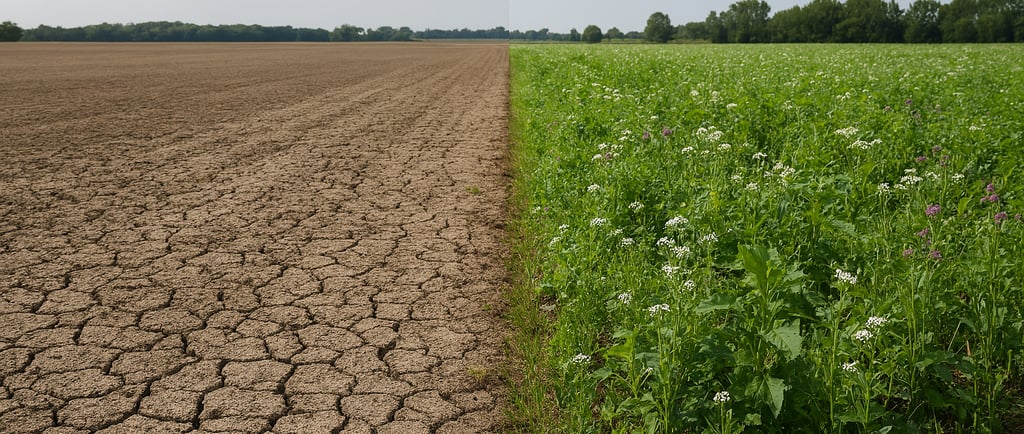
The knowledge loss documented here was not the natural obsolescence of inferior methods replaced by superior ones. It was the predictable outcome of a specific policy document — the 1962 Committee for Economic Development report An Adaptive Program for Agriculture — combined with a funding structure that tied land-grant university research to the commercial interests of the input supply chain.
David King
3/6/202637 min read
The Great Forgetfulness
How We Lost Functional Soil Literacy, and How We Are Reclaiming It
1850–2025: What We Had, When We Lost It, and What It Cost
Prepared for ORCA Apprenticeship Program — Comptche, Mendocino County, CA
"Nature as Principle, Methods as Tools"
Preface: A Technical and Historical Analysis
This document has two audiences and a single purpose.
For the farmer: the methods documented in Section 1 are not new ideas proposed by researchers who have never pulled a crop. They are the methods your county extension agent demonstrated at field days in 1955, that vocational agriculture teachers showed in high school classrooms, that 4-H members practiced on family farms. They are older than the fertilizer program that replaced them. They require no purchased inputs to execute. This document explains precisely when they disappeared from agricultural training, through what institutional mechanisms, and why — and then describes each method in enough detail to begin using it this season.
For the policy maker: the knowledge loss documented here was not the natural obsolescence of inferior methods replaced by superior ones. It was the predictable outcome of a specific policy document — the 1962 Committee for Economic Development report An Adaptive Program for Agriculture — combined with a funding structure that tied Land Grant university research to the commercial interests of the input supply chain. The downstream costs of that transition are now carried by public budgets, rural communities, and public health systems. The apprenticeship model is the documented recovery mechanism. This report provides the evidence base for investing in it.
The methods described in this document were standard agricultural practice in the United States before 1962. They are documented in peer-reviewed literature, USDA extension bulletins, and Land Grant university curricula of that period. Their disappearance from mainstream agricultural training over the following twenty years is documented, dated, and mechanistically explained. Their restoration is the purpose of the ORCA apprenticeship program.
Section 1 — The Inventory: What Tools and Knowledge Existed by 1962
1. What Existed Before It Was Taken
By 1962 — the year a private corporate committee issued the policy document that triggered the dismantling — the following tools and frameworks were fully developed, peer-reviewed, institutionally transmitted, and in the hands of working farmers across America. This is not a list of things that were being studied in laboratories. This is a list of things that county extension agents demonstrated at field days, that 4-H kids practiced on family farms, that vocational ag teachers showed in high school classrooms, and that a first-year agronomy student performed in their first lab. The question is not whether this knowledge existed. It did, thoroughly and accessibly. The question is why it was gone twenty years later — and the answer is in Section 3.
1.1 Direct Microscopy and Functional Microbiology
Sergei Winogradsky (1856–1953) established the foundational techniques for identifying soil organisms by functional role rather than morphology alone. His concept of chemolithotrophy — organisms deriving energy from inorganic compounds — led directly to the identification of nitrifying bacteria (Nitrosomonas, Nitrobacter) in the 1890s. By 1900, a trained soil microbiologist could identify nitrogen-fixing Azotobacter, nitrifying bacteria, sulfur oxidizers, and denitrifiers using Winogradsky columns and selective media. These techniques were standard laboratory exercises in soil microbiology courses throughout the first half of the 20th century.
Selman Waksman (1888–1973), who won the Nobel Prize in Physiology or Medicine in 1952 for the discovery of streptomycin — itself isolated from the soil organism Streptomyces griseus — had published Principles of Soil Microbiology (1927) and Soil Microbiology (1952). The latter contained detailed protocols for dilution plate counts, direct microscopy, functional group enumeration, and the interpretation of microbial community composition as a soil health indicator. It was a standard graduate text. Streptomycin's discovery was only possible because Waksman's laboratory maintained the practice of characterizing soil organisms by their biological activity — the very practice that would be abandoned within fifteen years of his Nobel Prize.
The Nobel Prize for streptomycin was awarded in 1952 for work done entirely through biological soil investigation methods. By 1970, the institutional infrastructure that trained people in those methods was largely dismantled. The prize and the abandonment happened within eighteen years of each other.
1.2 Aggregate Stability, Tilth, and Physical Biology
The relationship between soil biology and aggregate stability was well established by the 1930s. William Albrecht at the University of Missouri had been publishing on the relationship between soil organic matter, microbial activity, and structural stability since the 1920s. His concept of the soil as a biological system — not a chemical substrate — was the organizing framework of his Department of Soils through the 1940s and 1950s.
W.W. Emerson's work on aggregate stability and the role of organic matter in mediating clay behavior was published in the 1950s. The slake test in various forms was standard in soil physics instruction. More importantly: farmers who had trained under the extension system before 1955 knew what good tilth felt like, smelled like, and crumbled like. The sensory assessment of soil physical structure — which we now frame as a scientific method — was then understood as practical skill transmitted through demonstration, not a protocol extracted from a journal paper.
1.3 Earthworm Ecology as Quantitative Assessment
Charles Darwin's The Formation of Vegetable Mould through the Action of Worms (1881) had been in continuous agricultural use for eighty years by 1962. By mid-century the earthworm count was a standard field diagnostic. Barrett (1947) had published quantitative relationships between earthworm populations and soil organic matter status. J.E. Satchell's work through the 1950s and 1960s established earthworm community composition as an indicator of soil management quality. A county extension agent in 1960 who couldn't conduct and interpret a timed earthworm dig count was considered underprepared for field work.
1.4 The Albrecht Method — Soil-Plant-Animal Continuum
William A. Albrecht (1888–1974), Chairman of the Department of Soils at the University of Missouri, spent forty years documenting the connection between soil cation balance, plant nutrient density, and animal and human health. His framework — base saturation percentages with Ca:Mg:K:Na ratios as the organizing principle of soil fertility — was published in peer-reviewed journals throughout the 1930s–1950s and synthesized in Soil Fertility and Animal Health (1958).
What is critical to understand about Albrecht's work for this analysis is not just the chemistry — it is the integrative framework. Albrecht understood that the chemistry he was measuring was a proxy for biological activity. He consistently argued that the goal of balanced soil chemistry was to support biological activity that in turn supported plant quality that in turn supported animal and human health. The soil-plant-animal-human chain was Albrecht's central organizing concept. It was not fringe. He was the department chairman.
The Albrecht Method was not displaced because it was wrong. It was displaced because it required a practitioner to understand the entire chain — soil → biology → plant → animal → human. The input optimization model required practitioners to understand only one link: soil → N-P-K → yield. You could train a technician to do the latter. You could not abbreviate the former.
1.5 Nitrogen Fixation and the Nodule Cut Test
The biochemistry of biological nitrogen fixation was well understood by mid-century. The leghemoglobin cut test — the pink/red interior indicating active N₂ fixation — was standard extension practice. USDA bulletins on legume inoculation and nodule assessment were widely distributed through the 1940s and 1950s. 4-H programs taught nodule assessment. Vocational agriculture teachers demonstrated it. The knowledge was not confined to universities — it was in the hands of farmers.
The loss of this practice is particularly instructive because it didn't require a laboratory. A knife, a legume plant, and the knowledge of what pink means — that is the entire protocol. Its disappearance was not a failure of equipment access. It was a failure of transmission.
1.6 The Physical and Chemical Observational Toolkit — No Equipment Required
Alongside the biological methods described above, pre-1962 agronomy had developed a comprehensive battery of physical and chemical field observations that required no laboratory, minimal equipment, and in many cases nothing beyond a trained practitioner's hands, eyes, and nose. These are not technically demanding methods that were superseded by better tools. They are simple observational protocols that any trained farmer could perform in ten minutes on any soil, any day, at zero cost. Their disappearance is evidence not of obsolescence but of deliberate curriculum removal.
Jar Dispersion Test
Protocol: Fill a clean jar 1/3 with field soil. Add water to fill. Shake vigorously 60 seconds. Set undisturbed. Read at 1 hour and 48 hours: layer separation, water clarity, surface behavior.
What It Assessed: Clay dispersion vs. flocculation. Turbid water = dispersive cations (Na, excess Mg) dominating; clear water = calcium-dominated, biologically stable aggregation. Slick oily surface = organic dispersants or sodic condition. A direct read of cation balance and aggregate chemistry requiring no reagents.
Historical Status by 1962: Standard field practice at county extension demonstrations. Published in USDA soil management bulletins. Taught in vocational agriculture curricula. Performed by farmers, not just advisors.
Ribbon / Texture Test
Protocol: Take a moist soil sample (golf ball size). Work into a consistent moisture. Extrude between thumb and forefinger to form a ribbon. Measure length before breaking. Note feel: gritty (sand), silky (silt), sticky/plastic (clay).
What It Assessed: Textural class estimation without a hydrometer. Ribbon length: less than 2.5cm = sandy loam; 2.5–5cm = loam to clay loam; greater than 5cm = clay. Plastic + non-gritty + long ribbon + turbid jar = Mg-dominated clay. Zero equipment.
Historical Status by 1962: Standard first-year soil science instruction. Published in every soil science textbook in use before 1970. Performed as a field demonstration in extension programs routinely.
Slake Test
Protocol: Air-dry two or more aggregates. Place gently on the surface of still water. Observe at 1, 5, 10, and 30 minutes. Do not disturb. Record behavior: intact, slow expansion, rapid clouding, or instant dissolution.
What It Assessed: Aggregate water stability — the direct measure of biological glue (bacterial EPS, fungal glomalin, root exudate polymers) vs. dispersive chemistry. Intact at 30 min = biologically active, calcium-dominated. Instant dissolution = dispersive cations, biological collapse, or sodium intrusion. Visible fragments can be examined for hyphal threads.
Historical Status by 1962: Documented in soil physics literature from the 1930s. Emerson's aggregate stability work (late 1950s) formalized the chemistry behind what farmers had been observing informally for decades. Standard field assessment skill for trained farm advisors.
Compaction Knife Test
Protocol: Select an undisturbed profile face. Drag a standard pocket knife blade across the face under light hand pressure at 2-inch depth intervals from 0 to 18 inches. Note at which depth resistance increases sharply.
What It Assessed: Compaction zone location without a penetrometer. Depth and sharpness of transition indicates cause: shallow (0–4") = surface crusting; 6–8" = tillage pan; below 10" = subsoil compaction or clay layer. Cross-referenced with root deflection observations.
Historical Status by 1962: Standard practice — published in extension guides on tillage management. The pocket knife was the primary compaction assessment tool for farm advisors before the penetrometer became widely available in the 1970s.
Penetrometer (Pocket)
Protocol: Insert calibrated probe at consistent angle into moist soil. Read pressure at resistance. Repeat at 6" grid across field. Record depth and PSI of compaction zones. Compare to root deflection patterns.
What It Assessed: Quantitative compaction: less than 200 PSI = adequate root penetration. 200–300 PSI = reduced root growth (FLAG). Greater than 300 PSI = root growth stops (STOP). Combined with knife test for profile depth characterization. Used to distinguish biological compaction from structural compaction requiring tillage.
Historical Status by 1962: Pocket penetrometers were available and in field use by the 1950s at agricultural experiment stations. By the 1960s they were standard equipment for trained farm advisors.
Infiltration Ring Test
Protocol: Drive a 6" diameter ring 3" into undisturbed soil. Prime with one fill of water; discard. Fill again with a measured volume; time to absorption. Calculate infiltration rate in inches per hour.
What It Assessed: Water infiltration rate — direct measure of macropore structure, biological activity, and aggregate stability under wetting. Greater than 2 in/hr = good. 0.5–1 in/hr = restricted (FLAG). Less than 0.1 in/hr = severe structural problem (STOP). Combined with jar test: low infiltration + turbid jar = Mg dispersion; low infiltration + clear jar = physical compaction/pan.
Historical Status by 1962: Infiltration ring methodology published and in field use from the 1930s. The coffee can ring test was taught at extension field days as a no-equipment version. Published in USDA watershed management and irrigation agronomy bulletins.
Root Zone Excavation and Autopsy
Protocol: Dig to expose a full root system of a representative plant. Lay on a light surface. Examine: root tip color (white/brown/black), aggregate attachment, deflection patterns, nodule presence, lateral root distribution, depth of penetration.
What It Assessed: The most information-dense single observation available to a field agronomist. Root tips are a biological assay: white = active growth in a healthy rhizosphere; brown = stress or inhibition; black soft = necrosis (anaerobic zone, toxicity, or nematode pressure). Root deflection angle and depth directly map compaction zones. Zero equipment beyond a spade.
Historical Status by 1962: Standard practice in agronomy field courses and extension demonstrations from the 1920s onward. Every trained farm advisor before 1970 was expected to be able to read a root system.
Earthworm Timed Count
Protocol: Excavate a 1ft × 1ft × 12" pit. Count all earthworms, sorting by size class (juveniles, adults, large adults). Record per square foot. Multiply by 10.76 for per-m² estimate. Note behavior: curl rigid, limp, active.
What It Assessed: Biological activity integrator — earthworm populations reflect food availability (OM), physical conditions (compaction, drainage), and absence of toxicity. Mixed sizes = active reproduction (GO); adults only = recruitment failed (FLAG); none = community absent or toxicity (STOP). Rigid curl behavior indicates chemical stress.
Historical Status by 1962: Published in agricultural literature since Darwin (1881). Quantitative protocols published by Barrett (1947) and Satchell. Taught at extension field days as a no-equipment soil health indicator.
Soil Profile Color and Mottling
Protocol: Examine a freshly cut profile to 18". Note color transitions by depth, mottling patterns, and gleying (grey-blue zones). Use Munsell color notation if available; descriptive notes if not.
What It Assessed: Drainage history, oxidation-reduction history, and organic matter distribution. Orange-brown mottling = fluctuating water table. Grey-blue gleying = seasonally or permanently anaerobic. Dark brown continuous with depth = good OM distribution. Abrupt color transition = tillage pan or clay layer. A skilled practitioner could read drainage, compaction, and biological activity history from a profile in under two minutes.
Historical Status by 1962: Soil profile description was a standard field skill for trained agronomists and soil surveyors. The USDA Soil Survey manuals provided color and mottling interpretation guides in wide distribution.
Biocrust and Surface Biology Assessment
Protocol: Examine undisturbed soil surface in non-cultivated margins and between-row paths. Note texture, color, and biological cover. Wet finger pressed to surface and examined under 10× lens.
What It Assessed: Biological succession state and surface stability. Dark rough granular crust = cyanobacterial development (active N fixation, water stability). Powdery bare = no biological surface community. Algal green film = early succession. Lichen patches = mature, decades-stable surface. Surface crust biology is the fastest-responding indicator of surface management quality — visible changes within one season of management change.
Historical Status by 1962: Biological soil crusts were described in range management and dryland agronomy literature from the 1940s. Their role in surface nitrogen fixation and water stability was published before 1960.
Every method in this list requires no laboratory, no reagents, no electricity, and no specialist equipment. Execution time ranges from two to twenty minutes per method. The combined battery gives a trained practitioner more actionable diagnostic information about a soil's biological and physical condition than a standard Mehlich III chemistry panel — at zero cost, in under an hour. These methods were not superseded by more accurate alternatives. They were removed from curricula during the same institutional transition that redirected Land Grant research funding toward yield-response studies sponsored by fertilizer and pesticide manufacturers.
1.7 The Transmission Infrastructure — The Grange Network
The methods described in sections 1.1 through 1.6 required a transmission system. They were not learned from bulletins. They were learned from people — demonstrated in fields, corrected in practice, passed from experienced hands to new ones across generations of farming families. That transmission system had a physical infrastructure. It was the Grange.
The Patrons of Husbandry, founded in 1867, was not a social club. It was the decentralized, farmer-governed educational institution through which the entire body of agricultural biological knowledge described in this section moved from practitioner to practitioner, across generations, entirely outside the Land Grant university system. At its peak the Grange had over 800,000 members and operated a knowledge transmission network that no government extension service could replicate: peer to peer, demonstration-based, rooted in specific soils and specific places, and accountable to farmers rather than to research funders. Grange halls held field days and seed swaps, soil demonstrations and crop trials. The nodule cut test, the earthworm count, the jar dispersion test, the smell of biologically active soil after rain — these were not things farmers read about. They were things farmers showed each other, in local halls, organized and governed by themselves.
In Mendocino County alone, seven Grange halls were established across the farming communities of the county's valleys and ridges. The density is not coincidental — it reflects what the county's agricultural economy actually was before consolidation: diverse, small-scale, multi-crop, and dependent on sophisticated management of distinct soils under distinct conditions. Laytonville, Boonville, Comptche, Willits, Ukiah — each hall represented a local network of farming families exchanging knowledge about what worked in their specific place. Those halls are still standing. Most are nearly empty.
The Grange's decline maps precisely onto the CED timeline. The 1962 report did not target the Grange. It did not need to. It targeted the class of farmer who used it. When consolidation policy eliminated two million small farm operations over five years, it eliminated the constituency. The halls did not close dramatically. They gradually, quietly, had no one left to meet in them. The knowledge transmission infrastructure was not captured or redirected or defunded. It was simply emptied of the people it served.
This is significant beyond the historical narrative. The Grange was structurally immune to every mechanism that subsequently dismantled Land Grant biological literacy. It had no research budget for industry to capture. It had no government mandate to redirect. It had no professional credentialing system for language to infiltrate. It was practitioner to practitioner, in local halls, governed by farmers. The only thing that could stop it was the removal of the farmers themselves. And that is precisely what happened.
The Grange halls of Mendocino County are the most visible physical evidence of the Great Forgetfulness. Drive through Comptche, Laytonville, or Boonville and you will see them — substantial buildings, well-constructed, placed at the center of communities that were once farming communities. They are not abandoned because the knowledge they carried became obsolete. They are abandoned because the policy of 1962 eliminated the class of people who carried it. They stand as monuments to a transmission infrastructure that predated every extension bulletin, every Land Grant curriculum revision, every industry-funded research agreement — and that outlasted all of them, until there were no farmers left to walk through the doors.
Section 2 — The Six Missing Links: What Was Lost That Has Not Been Recovered
The following six areas represent knowledge that existed, was being practiced, and was severed from transmission during the Great Forgetfulness. They are presented not as historical curiosities but as active restoration targets for the ORCA curriculum.
Missing Link 1: Plant Sap Analysis and the Real-Time Diagnostic Gap
Evidence rating: ★★★ Peer-reviewed consensus — active research restoration underway
When we lost plant sap analysis, we didn't just lose a tool. We lost the ability to have a conversation with the crop.
Throughout the 1940s and 1950s, researchers including T.R. Hill, Horace Chapman at the University of California, and workers at state agricultural experiment stations were developing and using in-season tissue and sap testing protocols. The fundamental insight was simple and profound: a soil test tells you what nutrients are potentially available in the soil matrix. A plant sap test tells you what is actually inside the plant at this moment. These are not the same question.
The difference is the biological translation step — the rhizosphere, the mycorrhizal network, the root exudate-microbial relationship. A soil with apparently adequate potassium on a Mehlich III report can have a plant with severe potassium deficiency if the biological translation mechanism has been damaged. A soil test cannot detect this. A sap test catches it in real time.
The Pre-1962 Method
Field sap kits of the 1940s–50s used nitrate-specific colorimetric reagents applied directly to cut plant stalks. Potassium could be estimated by conductivity and by specific precipitation reactions. The tests were crude by modern standards but they were giving farmers real-time biological feedback from the plant's vascular system that no soil test could provide. The critical insight approaching formalization was the concept of the diagnostic window: sap analysis is most informative at vegetative peak before transition to reproductive, and at early fruit set. A skilled practitioner reading sap at these windows could distinguish between deficiency, translocation failure, antagonism, and biological translation failure. No other single tool could make these distinctions.
What Replaced It — and Why That Was a Catastrophe
What replaced sap analysis was the calendar application schedule. If the crop should receive 120 lbs N per acre based on yield target, apply 120 lbs N per acre on schedule regardless of what the plant is actually showing. This approach has one advantage: it requires no skill to execute. The consequence was the severing of the feedback loop between the farmer and the crop. When a plant shows stress under a calendar-based program, the diagnosis is always the same: more input. There is no diagnostic category for "adequate nutrition, failed biological translation." That category requires sap analysis to see. Without it, the farmer is flying blind and the input supplier is the only one with a solution.
Modern Restoration
The work of Arden Andersen and, more recently, NovaCropControl's work in the Netherlands have restored quantitative sap analysis as a precision diagnostic tool. Modern sap analysis can now measure 14–20 elements in mobile and immobile fractions simultaneously. The Brix refractometer remains the most accessible real-time field tool available.
Brix is not a sophisticated measurement. It is a refractometer reading that a 1950s farmer could do in the field — with a precision optical instrument that then required real capital investment, and that today costs $20. Healthy well-mineralized plant sap reads 12–16° Brix. Deficient or biologically unsupported plant sap reads 4–8°. The insects know this too — below 7° Brix, sucking insects can access plant sap; above 12° Brix, the osmotic pressure prevents it. This is why well-nourished crops have fewer pest problems, and why the observation has been in farming practice for over a century while the mechanism wasn't formalized until recently.
Missing Link 2: Redox Potential and the Electrical Dimension of Soil
Evidence rating: ★★ Peer-reviewed — widely understood in soil chemistry, rarely taught in agronomy
Soil is not merely a chemical system. It is an electrochemical system. The Reduction-Oxidation (Redox) potential — measured as Eh in millivolts — describes the electron-donating or electron-accepting capacity of the soil environment. It determines which chemical reactions are thermodynamically possible, which organisms can survive, which nutrients are in plant-available vs. plant-unavailable oxidation states, and whether the soil is aerobic, anaerobic, or in transition between the two.
Redox measurement using platinum electrodes was being applied to soil systems in the 1920s and 1930s. By mid-century it was a standard concept in soil chemistry textbooks. The Eh-pH diagram — showing the stability fields of iron, manganese, sulfur, and nitrogen compounds as a function of both redox potential and pH — was a teaching tool in soil chemistry courses.
Why Redox Was Abandoned
pH is easy to measure and easy to communicate. Redox potential requires a platinum electrode, a reference electrode, and an understanding of electrochemistry that goes significantly beyond what can be communicated in an extension bulletin. More fundamentally: there is no bag of product that fixes a low-Eh soil. A soil with low Eh and adequate N-P-K on a soil test is not going to respond to more N-P-K — it needs aeration, drainage, or a management change. That reality has no commercial application in the input model.
The Lime Problem: A Redox Catastrophe
The simplification of soil chemistry education to pH alone — "if pH is below 6.5, apply lime" — led to massive over-application of calcium carbonate across American and British agriculture from the 1960s through the 1990s. Organic matter at pH 5.5–6.0 in a slightly reducing soil environment is relatively stable. Raise pH rapidly to 7.0–7.5 with excess carbonate and you spike oxidation of the organic matter, releasing a flush of CO₂ and soluble nutrients, followed by a crash. Extension agents in the 1960s and 1970s were reporting soil organic matter levels dropping after heavy lime application and attributing it to other causes — when a significant portion of the loss was directly attributable to carbonate-driven organic matter oxidation.
Calcium sulfate (gypsum, CaSO₄) does not have this problem. It supplies calcium without the carbonate-driven pH spike, does not oxidize organic matter, and specifically addresses Mg-Na dispersion. The replacement of gypsum by high-carbonate lime as the primary calcium amendment was one of the most consequential agronomic errors of the 20th century — and it was only possible because the distinction between calcium-as-pH-correction and calcium-as-structural-amendment requires understanding redox chemistry that was no longer being taught.
The organisms that were being killed by over-oxidation through overliming were the same organisms whose activity Waksman had been studying to discover antibiotics. The industrial agricultural system was simultaneously winning the Nobel Prize for discoveries made through soil biological investigation and implementing management practices that destroyed the organisms those discoveries came from.
Missing Link 3: The Rhizophagy Precursors — Plants as Active Hunters
Evidence rating: ★★ Peer-reviewed — Rhizophagy Cycle formally described by White and Chakrabarti 2021; precursors observed 1920s–1940s
The Liebig model of plant nutrition — plants absorb mineral ions from soil solution; the farmer's job is to maintain adequate concentrations of those ions — became the foundational assumption of 20th-century agricultural chemistry. It is not wrong. But it is critically incomplete, and the incompleteness was visible in the research record before the Great Forgetfulness severed the investigative thread.
As early as the 1920s and 1930s, researchers studying root-microbe interactions were observing phenomena that the ion-absorption model could not explain. Plants were demonstrating nutrient uptake patterns that required either an active selection mechanism or a biological intermediary. Specific organisms were being isolated from root surfaces that had been internalized into root cells and then expelled, apparently stripped of their mineral content. The plant was not merely absorbing ions from a solution — it was, in some cases, actively ingesting and processing microbial cells. This observation was suppressed not through conspiracy, but through paradigm. Research that implied plants were doing something more sophisticated than absorbing dissolved minerals did not fit the model, did not lead to fertilizer recommendations, and did not attract funding.
The Rhizophagy Cycle — Formalized 2009–2021
James F. White, working at Rutgers University, published a formal description of the Rhizophagy Cycle beginning in 2009 and culminating in the comprehensive treatment in 2018–2021. The cycle describes a precisely regulated process:
Plants inoculate seeds and root surfaces with specific endophytic microorganisms (bacteria and fungi).
Those microorganisms colonize the rhizosphere and soil beyond the root, scavenging nutrients — particularly phosphorus, potassium, iron, and zinc — that are immobile in soil solution and therefore unavailable for passive diffusion into the root.
The plant actively internalizes these nutrient-laden microorganisms through root hair cells via a mechanism involving reactive oxygen species.
Inside the root cortical cells, the microorganisms are stripped of their nutrient content by reactive oxygen species produced by the plant.
The stripped (but living) microorganisms are expelled back into the rhizosphere through root hair tips.
The cycle repeats — the expelled organisms re-enter the soil, scavenge more nutrients, and are reinternalized.
This is not passive ion absorption. This is active predation. The plant is using microorganisms as nutrient extraction agents and then farming those agents through a repeated strip-and-release cycle. The plant is a hunter — not a straw.
Anhydrous ammonia (NH₃) — introduced as the dominant N source in American row crop agriculture in the 1950s and 1960s — is directly toxic to the soil biological community at field application rates. It raises local soil pH to 9–10 at the point of injection, creating a biological dead zone. The organisms killed include the very endophytes and rhizosphere bacteria that the Rhizophagy Cycle depends on. Glyphosate's chelation of zinc, manganese, and copper in the rhizosphere — and its disruption of the shikimate pathway in soil microorganisms — targets the same community.
The Rhizophagy Cycle reframes the entire history of the Great Forgetfulness. The 1930s researchers who were observing organisms inside root cells were seeing the mechanism that made the Liebig model incomplete. Had that thread been maintained rather than cut, the introduction of anhydrous ammonia and systemic biocides into agricultural practice would have had to contend with the biological cost to the plant's own nutrient acquisition system. Instead, that cost was invisible — because the framework that made it visible had been abandoned.
Missing Link 4: The Smith-Lever Institutional Collapse — How Knowledge Stops Moving
Evidence rating: ★ Historical record / institutional analysis
The Smith-Lever Act of 1914 created the Cooperative Extension Service — the institutional mechanism by which Land Grant university research was transmitted to farmers through county-based agents who lived in the communities they served. For the first fifty years of its existence, the Extension agent was a generalist who understood farming as a system. The county agent in 1940 knew soil, crops, livestock, economics, and community health. They walked fields, cut nodules, smelled soil, read plant symptoms, and assessed tilth with their hands. The knowledge they transmitted was embodied knowledge — demonstrated, practiced, and corrected in the field — not abstracted information delivered through a report.
The CED's 1962 report recommended consolidation and efficiency throughout the agricultural economy, including its knowledge infrastructure. By the late 1960s and 1970s, the generalist county agent was being replaced by subject-matter specialists — the Corn Specialist, the Soybean Specialist, the Pesticide Applicator Specialist, the Farm Financial Management Specialist. This siloing had an immediate and predictable effect: it became institutionally impossible to see the Albrecht chain. A Corn Specialist optimizes corn yield. They are not trained to, institutionally responsible for, or funded to consider the effect of corn optimization practices on soil biological activity, on the mineral density of the grain, on the health of livestock fed that grain, or on the long-term productive capacity of the soil.
By the 1970s, Land Grant university research was increasingly dependent on industry grants from fertilizer manufacturers, pesticide companies, and seed companies. Research that demonstrated how to reduce input costs through biological management competed directly with the funding source. This is not a conspiracy — it is a standard institutional incentive structure operating exactly as institutional economists would predict.
The most revealing indicator of the institutional collapse: by 1985, most Land Grant agronomy programs had eliminated required coursework in soil biology, animal nutrition, and the soil-plant-animal relationship. A student could graduate with a degree in agronomy without ever performing a Baermann funnel extraction, without ever cutting a nodule, without ever identifying a feeding guild under a microscope. These were not electives that were cut. They were the core skills of the prior generation, and they were gone.
Missing Link 5: The Forage-Livestock Connection — The Broken Nutrient Cycle
Evidence rating: ★★★ Peer-reviewed consensus — Voisin, and subsequent rotational grazing research
The most devastating single loss in the Great Forgetfulness was not in soil chemistry or soil biology or plant physiology. It was in the integration of animal agriculture with soil management — the breaking of the nutrient cycle at its most productive link.
André Voisin (1903–1964) was a French biochemist and farmer whose book Grass Productivity (1959) represented the most complete articulation of the soil-plant-animal-human chain available in the 20th century. Voisin's foundational contribution was the concept of rational grazing: the understanding that grass recovery rate after grazing follows a precisely predictable growth curve, and that overgrazing occurs not when animals take too much at one time but when they return to the same area before adequate recovery. Voisin's larger insight was that the grazing animal is not merely a consumer of grass — it is a soil amendment applicator. A well-managed grazing animal deposits dung and urine in a spatial pattern that, combined with hoof impact, maintains and builds soil organic matter, drives microbial diversity, and creates the soil physical structure that supports water infiltration.
For ten thousand years of agriculture, the nutrient cycle operated as a closed or semi-closed loop: soil minerals moved through plants, into animals, through animals back to soil via manure, and were continuously concentrated and redistributed by biological activity. The CAFOs that replaced managed grazing did not just remove the animal from the land — they removed the biological engine that drove the most productive nutrient cycle in temperate grassland agriculture.
The most visible evidence of what was lost is the removal of fence infrastructure across American and British agriculture between 1960 and 1985. Rotational grazing requires paddock subdivision. The removal of interior fencing was the physical infrastructure of the decision to stop managing grazing as a biological process. It was possible only because the knowledge of why that fencing existed had already been lost from the institutional curriculum.
Voisin died in Havana in 1964, where he had gone to advise the Cuban agricultural system on rational grazing methods. His death cut the active transmission of his practical framework at a moment when American agriculture was making its most consequential decisions about the role of livestock in soil management. Cuba retained and developed his methods. American agriculture abandoned them.
Missing Link 6: The Sensory Diagnostic Arts — Taste, Touch, Smell, and Sight
Evidence rating: ★ Practitioner consensus / partial peer-reviewed confirmation — Brix studies; geosmin biochemistry
The replacement of the human senses by the laboratory report is perhaps the most profound single rupture in the apprenticeship chain. Sensory knowledge looks like subjectivity until you understand its biochemical basis — and then it looks like an extraordinarily cheap and fast diagnostic tool.
Smell
The earthy smell of biologically active soil is geosmin — a bicyclic sesquiterpene produced during sporulation by Streptomyces and other Actinomycetes. Human detection threshold: 0.006–0.010 µg/L, approximately 100 parts per trillion. This is not a qualitative impression. It is a specific molecule, produced by specific organisms, under specific conditions, detectable at concentrations that are genuinely trace-level. The human nose is a geosmin detector of extraordinary sensitivity — far more sensitive than any instrument available to a farmer in 1950, and more immediately accessible than any instrument available to a farmer today.
Taste and Brix
A 1950 farmer who chewed a leaf of clover from a well-managed pasture and a leaf from an overworked field and found them to taste meaningfully different was not imagining it. The dissolved sugar and organic acid content of plant sap — which is what Brix measures — varies by a factor of two to four between nutritionally dense and nutritionally deficient plant material. Livestock demonstrate this: given a choice, cattle will graze to higher Brix forages first.
Touch — Soil Friability and Tilth
The word "tilth" has almost disappeared from modern agronomy. It refers to the physical condition of a soil for seed germination and root growth. A handful of soil with good tilth crumbles cleanly under moderate pressure, retains its shape briefly, and releases a slight earthy smell. It does not smear, ball, crack, or powder. This assessment — squeeze, crumble, smell — takes approximately ten seconds and requires no equipment. You cannot learn it from a bulletin. You learn it from someone who knows what it is supposed to feel like, showing you what it feels like, in the same field, at the same time.
Sight — Plant Symptomology as Community Reading
Pre-1962 agronomy training included detailed instruction in reading plant symptoms as soil and biological indicators. Purpling of lower leaves in corn indicating phosphorus stress. Interveinal chlorosis patterns distinguishing iron deficiency from manganese deficiency. The specific growth habit differences between nitrogen-limited and sulfur-limited plants. The loss of plant symptomology as a diagnostic tool was simultaneous with the adoption of calendar-based spray programs. The sensory diagnostic skills were displaced not because they were replaced by superior tools, but because the management system that employed them was replaced by a system that had no use for them.
The loss of sensory diagnostics is both the most profound and the most recoverable element of the Great Forgetfulness. It is the most profound because it severed the direct feedback loop between the farmer and the land — the loop that every traditional agricultural system in every culture operated through. It is the most recoverable because the human sensory apparatus has not changed. The geosmin detector in the human nose is exactly as sensitive as it was in 1950. What is missing is the training — the experienced practitioner, the demonstration, the correction, the accumulated understanding of what different smells and textures and colors mean. That is precisely what an apprenticeship program restores.
Section 3 — The Mechanism: How the Dismantling Was Designed and Why It Worked
3. The Mechanism of Loss — A Documented Institutional History
The displacement of biological soil literacy from American agricultural training between 1962 and 1985 was not the natural consequence of scientific progress, nor the benign result of resource constraints. It was the predictable outcome of a specific set of institutional decisions made by identifiable actors with identifiable financial interests, using mechanisms that are documented in the public record.
If agricultural biological literacy was displaced by five specific institutional mechanisms operating simultaneously, then recovery requires a counter-mechanism for each of the five. A recovery strategy that addresses curriculum but not funding, or transmission but not language, will encounter the remaining mechanisms intact. The table in 3.2 maps each mechanism of loss to its current status and its required counter. That mapping is the structural logic of the ORCA apprenticeship program.
3.1 The Actors and Their Interests
The Committee for Economic Development (CED) was not a government agency. It was a private organization of corporate executives — in 1962 its membership included executives from Standard Oil, the major chemical companies, agribusiness processors, and the emerging pesticide and synthetic fertilizer manufacturers. Its 1962 report An Adaptive Program for Agriculture called explicitly for the elimination of approximately two million farms over five years. The justification was economic efficiency. The mechanism was to accelerate the consolidation of agricultural production into large commodity operations that would be entirely dependent on purchased inputs — seed, fertilizer, pesticide, herbicide — for their operation.
A farm that manages its own soil fertility through biological methods, saves its own seed, and maintains its own composting system has a minimal relationship with the input supply chain. A large commodity operation locked into hybrid seed, anhydrous ammonia, glyphosate, and synthetic micronutrient packages generates recurring revenue for every input it uses, every season, with no exit. The knowledge that had to disappear for this transition to be irreversible was precisely the biological literacy documented in Section 1. A farmer who can read a Baermann funnel, cut a nodule, smell healthy soil, read plant sap Brix, and assess earthworm populations has the tools to manage fertility without purchasing it. Its displacement was not a side effect of modernization. It was a precondition for market capture.
3.2 The Five Mechanisms — Why the Strategy Worked
The dismantling succeeded because it operated simultaneously on five levels: policy, funding, curriculum, language, and transmission. Each level reinforced the others.
Mechanism 1 — Policy: the CED Report
How it was implemented: The 1962 report provided institutional cover for farm consolidation. USDA policy followed its recommendations. Land Grant mission statements were explicitly reoriented toward supporting large commodity operations.
Why it was effective: It operated at the level of institutional mandate, not individual choice. Individual agronomists could not resist a curriculum reorientation driven by their institution's stated mission and funding structure.
What remains today: Farm Bill structure still prioritizes commodity crops and input-dependent production. Organic and regenerative programs remain a small fraction of USDA research and extension budgets.
Mechanism 2 — Funding Capture: Land Grant Research
How it was implemented: By the 1970s, Land Grant research was substantially funded by fertilizer manufacturers, pesticide companies, and seed companies through direct grants, endowed chairs, and cooperative research agreements. Monsanto, DuPont, Dow, and the major fertilizer producers were institutional funders of the same universities that trained extension agents.
Why it was effective: Research that demonstrated biological alternatives to inputs competed directly with the funding source. Not through censorship — through the structural reality that unfunded research doesn't happen. Biological soil management research starved while input-optimization research was generously supported.
What remains today: Industry funding of Land Grant research and USDA-ARS programs remains the dominant model. The revolving door between USDA leadership and agribusiness is documented and continuous. This is the mechanism that is still most active.
Mechanism 3 — Curriculum Displacement: Extension Specialization
How it was implemented: The generalist county extension agent was replaced by subject-matter specialists. The Corn Specialist. The Herbicide Applicator. The Farm Finance Specialist. Each specialist had a narrow mandate that structurally excluded the integrative biological view. No single specialist was responsible for the soil-plant-animal chain, so no specialist taught it.
Why it was effective: Specialization is immune to individual competence. A brilliant Corn Specialist who understood Albrecht's framework had no institutional role through which to transmit it. The knowledge became professionally unrecognized — you could not get a job teaching it, and you could not get paid for practicing it within the extension system.
What remains today: Extension specialization is still the dominant model. The generalist farm advisor who understands soil, plant, animal, and human health as an integrated system has no institutional home in the current USDA extension structure. ORCA is building the replacement.
Mechanism 4 — Language Capture: Redefining the Terms
How it was implemented: Technical vocabulary was systematically narrowed. "Soil health" came to mean a soil chemistry panel. "Plant nutrition" came to mean NPK replacement rates. "Yield" became the only valid measure of agricultural output. Words that described biological relationships — tilth, humus, friability, sward, biotic potential — were allowed to fade from technical literature and professional training.
Why it was effective: You cannot teach what you cannot name, and you cannot name what does not appear in the professional vocabulary of your field. A generation of agronomists trained in the narrowed vocabulary could not even formulate the questions that biological literacy requires. The loss of language was the loss of the capacity to see.
What remains today: Still active. "Regenerative agriculture" is currently being captured and redefined by the same input manufacturers — now selling "regenerative" herbicides and "biological" synthetic fertilizers. Language capture is the fastest and cheapest mechanism, and it is running in real time.
Mechanism 5 — Transmission Chain Severance: One Generation
How it was implemented: Embodied biological assessment skills — the Baermann funnel, the nodule cut, the smell assessment, sap Brix, earthworm counts — require demonstration and supervised practice for transmission. When the curriculum that required these skills was eliminated, the practitioners who taught them retired with no successors. The chain did not weaken — it was cut at a single generational node.
Why it was effective: This was the most elegant mechanism because it was self-completing. You only have to interrupt transmission for one generation. After that, the knowledge exists only in documents — and documented knowledge without practitioners to demonstrate it is archived, not alive. The system did not need to destroy the books. It only needed to stop training the people who could read them in the field.
What remains today: The generation that was trained before 1965 is now in its 80s and 90s. The window for direct transmission from that generation is functionally closed. What ORCA is doing is not revival — it is reconstruction from documented sources plus the surviving practitioner thread. The urgency is real.
3.3 Why These Mechanisms Together Were Unstoppable
Each mechanism alone was resistible. Individual researchers continued biological soil science. Individual farmers maintained biological management. What made the combined strategy effectively unstoppable for twenty years was its comprehensive targeting of every level through which the knowledge could survive and re-enter the mainstream:
Policy cut the institutional mandate — Land Grants no longer had a reason to teach biological literacy.
Funding cut the research pipeline — biological management had no access to the resources needed to generate new evidence.
Curriculum cut the professional formation — graduating agronomists did not encounter the knowledge during training.
Language cut the conceptual access — without the vocabulary, practitioners could not formulate biological questions even if they wanted to.
Transmission cut the chain at the generational level — ensuring the knowledge had no living practitioners to carry it forward.
The regenerative agriculture movement will not succeed by publishing more papers or holding more conferences. The input industry has infinite capacity to produce papers and conferences of its own. It will succeed by rebuilding the one mechanism that industrial agriculture cannot replicate: the apprenticeship chain. You cannot manufacture a practitioner who has spent 2,000 hours in biologically managed soil under the supervision of someone who has spent 30 years there. That knowledge is not purchasable. It is not patentable. It is not displaceable by a better-funded competitor. It is the one form of agricultural knowledge that the industrial system has no counter to — which is precisely why the transmission chain was the primary target of the original dismantling.
Section 4 — The Recovery: Why the Apprenticeship Model Is the Required Response
4. What Recovery Requires
The five mechanisms that accomplished the knowledge loss were institutional: policy redirection, funding capture, curriculum displacement, language narrowing, and transmission chain severance. Documentation, conferences, and publications can address the first four. Only one mechanism addresses the fifth — the one that cut the embodied, practitioner-transmitted, field-corrected skill chain at a single generational node. That mechanism is supervised apprenticeship: a practitioner demonstrating what geosmin smells like after rain, what a jar of dispersed clay looks like versus calcium-dominated aggregate, what a healthy root system looks like when pulled and what a damaged one looks like. Two thousand hours of that, under real conditions, with real stakes.
Integrated theoretical framework
Lost through: Curriculum displacement — replaced with input optimization.
Required recovery: Comprehensive technical curriculum covering soil biology, plant physiology, animal nutrition, and their integration — as ORCA's 288–350 hour RTI requirement. Cannot be abbreviated without losing the integration.
Embodied sensory skill
Lost through: Transmission chain severed — no practitioners to demonstrate.
Required recovery: Field-intensive OJT (2,000+ hours) under direct supervision of experienced practitioners. The sensory assessment skills — smell, touch, taste, sight — cannot be recovered from a document. They require demonstration and correction in the field.
Real-time plant and soil diagnostics
Lost through: Calendar application model displaced diagnostic thinking.
Required recovery: Active sap analysis and plant symptomology training in curriculum. Apprentices must leave the program able to ask the plant what it needs — not just calculate what it "should" receive.
Electrochemical and redox understanding
Lost through: Reduced to pH; redox dropped from curricula.
Required recovery: Redox potential as a standard component of soil chemistry instruction. Distinction between carbonate-based and sulfate-based calcium amendments as a required competency. Overliming recognition as a field diagnostic.
Livestock integration
Lost through: CAFOs + fence removal severed animal-soil cycle.
Required recovery: Voisin's Rational Grazing principles as a required component of the integrated farm management curriculum. Apprentices must understand the grazing animal as a soil amendment applicator, not merely a livestock production unit.
Institutional transmission chain
Lost through: Extension specialization destroyed generalist agent role.
Required recovery: The apprenticeship model itself is the institutional replacement. ORCA's dual registration (federal DOL + California DAS) is not bureaucratic formality — it establishes the legal and institutional framework for legitimate skill transmission across the full integrated knowledge base.
The ORCA apprentice who completes this program is not a specialist. They are a translator — between the biological reality of the soil and the regulatory, economic, and institutional systems that govern its management. That translation capacity is exactly what was eliminated by specialization. It is exactly what the current moment in California agriculture requires.
Section 5 — The European Continuity: The Unbroken Thread
5. Steiner, Pfeiffer, and the Luebkes — How Knowledge Survived the Rupture
The most important analytical frame for understanding what the American institutional rupture actually severed is this: the knowledge was not lost globally. While the Land Grant system was displacing biological soil literacy between 1962 and 1985, an Austrian farmer was building an on-farm microbiology laboratory, documenting 3,600 enzyme-driven reactions in biologically managed soils, and achieving organic matter levels that no American extension agronomist of the period would have considered possible. The knowledge survived in Europe because it was never subjected to the same policy-driven rupture. When it re-entered the United States in 1985, it came not as foreign science but as American science that had been expelled from American institutions and preserved abroad.
The lineage from Steiner to Pfeiffer to the Luebkes to ORCA is not a genealogy of alternative agriculture. It is the unbroken thread of the scientific tradition that American Land Grant institutions built, then abandoned, and that the European biological soil science tradition maintained while the abandonment was happening.
The Knowledge Lineage: Winogradsky → Waksman → Albrecht → Pfeiffer → Voisin → Luebkes → ORCA
5.1 Rudolf Steiner and the 1924 Agriculture Course
The foundational framework for the European biological soil tradition was Rudolf Steiner's 1924 Agriculture Course, delivered at Koberwitz. Steiner's framework treated the farm as a living organism and the soil as the primary biological substrate — not an inert medium for chemical delivery, but an entity with its own ecology, microbiology, and energetic life. This was not mysticism replacing science; it was a systems framework that preceded and in significant respects anticipated the soil food web ecology that contemporary science has since validated. Austria registered the first certified organic farm in the world based on Steiner's findings in 1927, and the Austrian farm policy tradition never made the industrial pivot that American Land Grant institutions made in the 1960s.
5.2 Raoul France and the Microbial Systems Framework
The Luebkes also drew on the work of Raoul H. France, the Czech-Austrian biologist whose 1920s work Bios: The Laws of the World provided an early systematic framework for understanding soil as a microbial community governed by ecological laws. France was among the first to describe the soil microbial world as a functional ecosystem rather than a collection of individual organisms — a conceptual step that American food web ecologists of the 1980s are typically credited for making, sixty years later.
5.3 Ehrenfried Pfeiffer — The European-American Bridge
Ehrenfried Pfeiffer (1899–1961) was the critical node between the European biological soil tradition and the American practitioner network. A soil microbiologist and student of Steiner, Pfeiffer developed the BD Compost Starter inoculant, the circular chromatography (chroma) test for evaluating soil and compost humus quality, and wrote Biodynamic Farming and Gardening (1938). He emigrated to the United States in 1940 and spent the remaining two decades of his life working to establish biological soil management in America. He met J.I. Rodale at Kimberton Farm School in Pennsylvania — a connection that gave biodynamic microbiology real, if little-acknowledged, influence on the early American organic movement.
When Pfeiffer died in 1961 — one year before the CED report — his institutional infrastructure was thin. The Land Grant displacement that followed did not compete with Pfeiffer's network; it grew to fill the space the network could not occupy.
The Luebkes worked directly with colleagues of Pfeiffer at The Pfeiffer Foundation in Spring Valley after his death. They used his BD Compost Starter and BD Field Starter inoculants and adopted his circular chromatography method for evaluating compost humus quality. The Luebke CMC system is not a departure from the Pfeiffer tradition — it is a refinement of it, grounded in Siegfried's additional decades of on-farm laboratory research.
5.4 Siegfried and Uta Luebke — The On-Farm Laboratory
Siegfried and Uta Luebke began farming organically in Peuerbach, Upper Austria, in the mid-1960s — exactly the years the American Land Grant system was beginning its institutional reorientation. While American extension agents were being retrained as input salesmen, Siegfried was building an on-farm microbiology laboratory with an extensive collection of microbial cultures and microscopic equipment. His research produced a database of 3,600 microbe-driven enzyme reactions in soils and composts — a body of functional soil microbiology that exceeded anything being produced by American university extension programs of the same era.
Starting from a clay loam soil with approximately 2% organic matter in the mid-1960s, the Luebkes brought one field to 15% organic matter within ten years of applying their full CMC humus management system. When Edwin Blosser visited in 1992 the organic matter in the primary field had reached 16.5% — he could dig his arm into the soil to his elbow. A neighboring field farmed conventionally by the prior co-owner remained at conventional organic matter levels. The difference was not soil type, not climate. It was twenty-five years of biological management.
The CMC Method — Controlled Microbial Composting
Aerobic windrow management with five critical parameters: clay addition (5–10%) to build clay-humus crumb; microbial inoculant (CMC Compost Starter — 55 strains); strict temperature ceiling (65°C max); CO₂ monitoring (10% max); daily turning in Week 1 tapering to weekly by Week 5–6. Finished compost in 6 weeks. The clay-humus crumb formation — binding of humic compounds to clay particles through microbial action — is the structural outcome that distinguishes CMC from thermophilic composting. It is visible under a dissecting microscope and is the mechanism by which CMC compost builds stable long-term organic matter rather than temporarily spiking and crashing the biological community.
Following the 1986 Chernobyl reactor accident, root vegetables from the Luebke farm showed uniquely low radioactive contamination compared to other farms in the regional fallout pattern. The proposed mechanism — the dense, biologically active humus layer acting as an ion-exchange and complexation matrix, binding cesium and strontium ions in the upper profile before they could enter the plant — had established mechanistic support in soil chemistry.
The Luebkes explicitly used a graph from Waksman's 1952 Soil Microbiology in their CMC seminars, showing the correlation between soil bacterial populations and crop yield. This is the same Waksman whose textbook had been standard Land Grant instructional content before the displacement. The Luebkes were not presenting alternative science. They were presenting the same science that American universities had been teaching — and then stopped. The circle is complete.
"Farming is quite different when you work with an active soil." — Uta Luebke
5.5 Re-Entry: How the Knowledge Came Back
The Luebkes' first US appearance was at the Acres U.S.A. Conference in Kansas City, Missouri, in 1985 — forty years after Albrecht was at the peak of his institutional influence and twenty years after the Land Grant displacement began. The venue was not coincidental. Acres U.S.A. was the publication to which Albrecht's papers had been bequeathed. It was the primary institutional home of the displaced American biological soil tradition.
From 1985 forward, the Luebkes conducted seminars across multiple US venues. The annual Pennsylvania and California seminars from 1992 to 1997 were held at practitioner-community locations — the Pennsylvania seminars in Amish farming country at Bird-in-Hand — not at a university, not through an extension service, but in the community that had maintained its own biological soil management traditions independent of Land Grant influence. The hands-on laboratory components — microscope work, compost preparation, inoculant application — were the same embodied transmission format that the Land Grant system had been providing before 1965 and had stopped providing by 1980.
The American transmission of CMC technology was institutionalized primarily through Edwin Blosser and Midwest Bio Systems. Blosser visited the Luebke farm in 1992, trained in CMC methods, and returned convinced. He began manufacturing the Aeromaster compost turner in Illinois, and made Midwest Bio Systems a distribution hub for CMC training and equipment. By the mid-1990s the CMC system was available across 47 states. The re-entry pattern was structurally identical to the survival pattern: practitioner-to-practitioner transmission, through alternative agricultural media, entirely outside Land Grant institutional channels.
You cannot learn to smell healthy soil from a paper. You cannot learn to read nematode community structure from a description. You cannot learn the cut test from a diagram. These are sensorimotor and perceptual skills that require supervised practice to develop. The Luebke seminars demonstrated that a few days of well-structured hands-on instruction with a practitioner who has thirty years of on-farm laboratory experience can change a farmer's entire relationship with the biological management of soil.
Selected References
Foundational Works
[1] ★ Albrecht WA (1975). The Albrecht Papers (4 vols., ed. Walters C). Acres U.S.A. The complete collected works — the most comprehensive single documentation of the soil-plant-animal-human framework before and after its institutional displacement.
[2] ★ Waksman SA (1952). Soil Microbiology. New York: Wiley. The standard graduate text for biological soil investigation. Contains the protocols that were standard Land Grant instruction before 1965.
[3] ★ Committee for Economic Development (1962). An Adaptive Program for Agriculture. New York: CED. The primary policy document. Read it.
[4] ★ Albrecht WA (1958). Soil Fertility and Animal Health. Webster City: Fred Hahne. The most accessible single-volume synthesis of Albrecht's framework.
[5] ★ Voisin A (1959). Grass Productivity (trans. Lecomte C). London: Crosby Lockwood. The foundational text on rational grazing and the soil-plant-animal nutrient cycle. Still in print.
Institutional History
[6] Cochrane WW (1979). The Development of American Agriculture: A Historical Analysis. University of Minnesota Press.
[7] Fitzgerald D (2003). Every Farm a Factory: The Industrial Ideal in American Agriculture. Yale University Press.
[8] Marcus AI (1985). Agricultural Science and the Quest for Legitimacy. Iowa State University Press.
[9] Lobao L, Stofferahn CW (2008). The community effects of industrialized farming. Agriculture and Human Values 25(2):219–240.
[10] Hightower J (1972). Hard Tomatoes, Hard Times. Cambridge: Schenkman.
[11] Berry W (1977). The Unsettling of America: Culture and Agriculture. San Francisco: Sierra Club Books.
[12] Jackson W (1980). New Roots for Agriculture. San Francisco: Friends of the Earth.
Plant Sap Analysis and Brix
[13] Andersen A (2000). Real Medicine, Real Health. Holistic Health Masters.
[14] Reams CA (1978). The Reams Biological Theory of Ionization. Acres USA.
[15] Brix H (1964). The effects of water stress on the rates of photosynthesis and respiration in Tomato plants and Loblolly Pine seedlings. Physiologia Plantarum 17(3):303–416.
[16] NovaCropControl (2018–present). Sap Analysis Technical Bulletins. novacropcontrol.com.
Redox and Soil Electrochemistry
[17] Sposito G (1989). The Chemistry of Soils. New York: Oxford University Press.
[18] Ponnamperuma FN (1972). The chemistry of submerged soils. Advances in Agronomy 24:29–96.
[19] Husson O (2013). Redox potential (Eh) and pH as drivers of soil/plant/microorganism systems. Plant and Soil 362:389–417.
Rhizophagy Cycle
[20] ★ White JF, Kingsley KL, Verma SK, Kowalski KP (2018). Rhizophagy Cycle: An oxidative process in plants for nutrient extraction from symbiotic microbes. Microorganisms 6(3):95. Free full text at MDPI.
[21] White JF, Chakrabarti A, et al. (2021). Seed-vectored microbes: Their roles in improving seedling fitness and competitor suppression. In: Microbiome Stimulants for Crops. Woodhead Publishing.
[22] Kiers ET, Denison RF (2008). Sanctions, cooperation, and the stability of plant-rhizosphere mutualisms. Annual Review of Ecology, Evolution, and Systematics 39:215–236.
Livestock Integration and Voisin
[23] ★ Voisin A (1959). Grass Productivity. See [5] above.
[24] Savory A, Butterfield J (1999). Holistic Management: A New Framework for Decision Making (2nd ed.). Washington: Island Press.
[25] Teague WR, et al. (2016). The role of ruminants in reducing agriculture's carbon footprint in North America. Journal of Soil and Water Conservation 71(2):156–164.
[26] Blanco-Canqui H, Lal R (2010). Principles of Soil Conservation and Management. Springer.
Sensory Diagnostics and Brix Field Assessment
[27] Gerber NN, Lechevalier HA (1965). Geosmin, an earthy-smelling substance isolated from actinomycetes. Applied Microbiology 13(6):935–938.
[28] Havlin JL, Tisdale SL, Nelson WL, Beaton JD (2014). Soil Fertility and Fertilizers (8th ed.). Pearson.
[29] Reganold JP, Wachter JM (2016). Organic agriculture in the twenty-first century. Nature Plants 2:15221.
[30] Kempf J (2015–present). Advancing Eco Agriculture podcast and technical bulletins. advancingeco.com.
European Continuity — Steiner, Pfeiffer, France, and the Luebkes
[31] Steiner R (1924/1993). Spiritual Foundations for the Renewal of Agriculture (trans. Gardner C). Biodynamic Farming and Gardening Association.
[32] Pfeiffer E (1938/1984). Biodynamic Farming and Gardening (4th ed.). Biodynamic Farming and Gardening Association.
[33] Pfeiffer E (1956). The Compost Manufacturers Manual. Threefold Farm.
[34] Pfeiffer E (1959). Chromatography Applied to Quality Testing. Bio-Dynamic Association.
[35] France RH (1921). Bios: Die Gesetze der Welt. Munich: Ernst Reinhardt.
[36] Luebke S, Luebke U (1980s–1990s). CMC Seminar Materials. Midwest Bio Systems / Aeromasters. midwestbiosystems.com.
[37] Blosser E (1995). Controlled Microbial Composting and Humus Management. Acres USA.
[38] ATTRA (National Sustainable Agriculture Information Service). Controlled Microbial Composting and Humus Management. USDA NCAT. Free PDF at attra.ncat.org.
[39] Ikerd J (2008). Crisis and Opportunity: Sustainability in American Agriculture. University of Nebraska Press.
[40] Walters C (1975–present). Acres U.S.A. — A Voice for Eco-Agriculture.
★ = Recommended entry points for further study
ORCA · Organic Regenerative Certified Apprenticeship · Surprise Valley Agroecology LLC · Comptche, Mendocino County, CA
"Nature as Principle, Methods as Tools"